
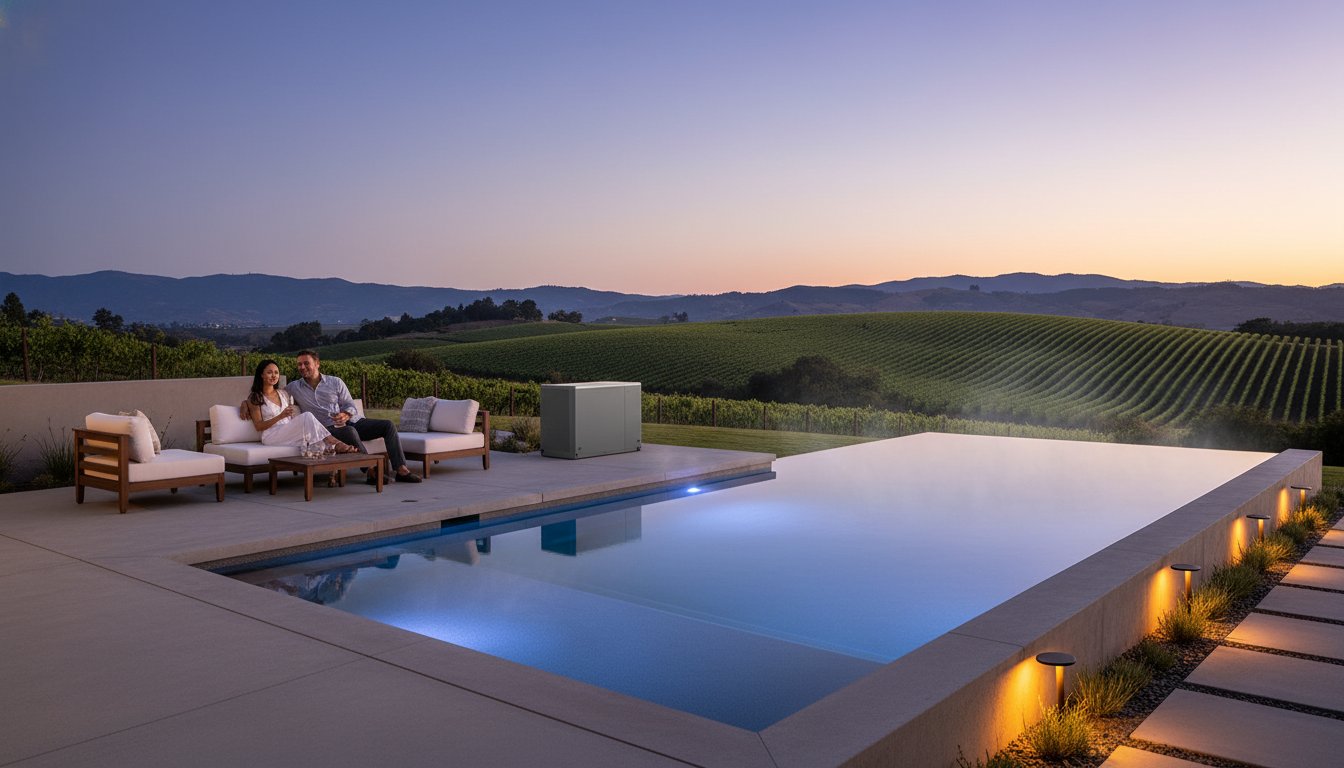
Did you know that as of January 1, 2026, California law now prohibits gas heaters from serving as the primary heat source for new pool projects? For homeowners considering pool heater installation napa, this regulatory shift represents more than just a compliance hurdle; it's a gateway to superior efficiency. While the Napa Valley climate offers stunning sunny days, our cool evening temperatures often lead to high utility bills for those relying on outdated or poorly installed systems. You likely want a pool that stays inviting without the constant worry of rising energy costs or equipment that fails after just a few seasons.
We understand that managing complex local permitting requirements and selecting durable equipment can feel like a daunting task. This guide will help you discover the most efficient pool heating technologies tailored for the Napa Valley climate, ensuring your investment delivers year-round comfort. We'll explore the latest heat pump innovations, solar thermal requirements under Title 24, and how smart automation can extend your system's lifespan for a decade or more.
Key Takeaways
- Understand the performance trade-offs between heat pumps, solar thermal, and gas systems to find the ideal balance of heating speed and long-term operational efficiency.
- Navigate the complexities of pool heater installation napa by aligning your project with specific local permitting requirements and electrical capacity assessments.
- Learn why precise BTU calculations are critical to preventing premature equipment failure and ensuring your custom-shaped pool maintains a consistent temperature.
- Discover how strategic heating solutions can extend your usable swim season from a few summer months to a year-round luxury experience in the Napa Valley.
- Identify the essential diagnostic steps, from gas line evaluations to equipment pad optimization, that guarantee a seamless and durable system integration.
Maximizing Your Napa Lifestyle: Why Pool Heating is Essential
Napa Valley living is synonymous with a sophisticated outdoor lifestyle, yet many homeowners find their pristine pools sitting idle for most of the year. While our summer afternoons are legendary, the Mediterranean climate brings sharp temperature drops once the sun dips behind the Mayacamas Mountains. Professional pool heater installation napa bridges the gap between a seasonal luxury and a year-round retreat. Without a reliable heating solution, your pool's natural temperature rarely reaches a comfortable baseline, even in the height of July. This often restricts swimming to a narrow three-hour window in the late afternoon, leaving the water too brisk for a morning workout or a late-night dip under the stars.
Investing in a high-quality heating system does more than just provide comfort; it protects the structural integrity of your vessel. Drastic temperature fluctuations can cause materials like plaster and concrete to expand and contract at different rates, potentially leading to hairline fractures or tile delamination over several decades. Maintaining a consistent temperature helps stabilize the environment for your pool's finish. For properties situated on the North Bay's iconic hillsides, professional oversight is even more critical. High-altitude or sloped installations require precise calibrations for gas pressure and ventilation to ensure the equipment operates safely and efficiently against the unique wind patterns of the region.
The Impact of Napa’s Microclimates on Heat Loss
Napa is a patchwork of microclimates where heating requirements vary significantly by ZIP code. Properties in American Canyon often contend with cool bay breezes and morning fog that sap heat through evaporation. In contrast, a vineyard estate in St. Helena may experience higher daytime peaks but requires a system capable of rapid recovery after a chilly valley floor night. Effective heating strategies leverage the thermal mass of custom concrete pools, using modern heat pump technology to maintain warmth captured during the day. Understanding these local nuances ensures your pool heater installation napa is sized correctly for your specific neighborhood's weather patterns.
Health and Wellness Benefits of Consistent Water Temperature
A heated pool transforms your backyard into a dedicated wellness center. Consistent water temperatures between 80 and 84 degrees are ideal for hydrotherapy, providing a low-impact environment to soothe joints and improve circulation. When the water is inviting at 6:00 AM, morning laps become a sustainable habit rather than a test of willpower. This reliability significantly increases the return on investment for your luxury outdoor space. Instead of a decorative element that is only functional for ninety days, your pool becomes a versatile asset for exercise, relaxation, and social gatherings throughout every season.
Roundup: Comparing the Top 3 Pool Heating Technologies for 2026
Choosing the right technology for pool heater installation napa has evolved significantly due to the California Title 24 Energy Code updates effective January 1, 2026. For new pool construction or first-time heater installations, gas-fired units are no longer permitted as the primary heat source. This shift prioritizes decarbonization and long-term efficiency, moving the focus toward heat pumps and solar thermal systems. While the initial investment for these compliant systems is often higher, the reduction in monthly operational costs creates a more sustainable luxury experience. The ideal solution for a vineyard-view infinity pool or a compact urban plunge pool now depends on balancing these mandatory primary sources with supplemental heating for rapid temperature spikes.
High-Efficiency Gas Heaters: Heat on Demand
Gas heaters remain the gold standard for rapid temperature recovery and dedicated spa integration. Under 2026 regulations, they serve as a powerful supplemental source rather than a primary one for new builds. They excel at raising water temperatures quickly for a planned evening event, even when the ambient air is brisk. Reliability is paramount, and industry leaders like the Pentair MasterTemp and Jandy JXi series dominate the market. These units meet strict Low-NOx emissions standards, ensuring they operate within California's environmental guidelines. Their compact footprint makes them ideal for tight equipment pads where space is at a premium.
Electric Heat Pumps: The Energy-Efficient Alternative
As the mandated primary heating source for most new California pools, heat pumps have seen a surge in adoption. Heat pump pool heaters operate by extracting warmth from the surrounding Napa air and transferring it to your pool water through a sophisticated refrigeration cycle. They are exceptionally efficient when paired with residential solar PV arrays, essentially allowing you to heat your pool using the power you've already harvested. While they heat more slowly than gas, they maintain a consistent baseline temperature with remarkable stability. They are most effective in Northern California when daytime temperatures stay above 50 degrees, making them a reliable workhorse for the majority of the year.
Solar Pool Heating: Harnessing the California Sun
Solar thermal systems offer a carbon-neutral way to meet primary heating requirements. By circulating water through roof-mounted collectors, these systems utilize the abundant Napa sunshine to provide a consistent base level of warmth at almost zero operational cost. For high-end architectural designs, the placement of these collectors is handled with meticulous attention to detail to preserve the aesthetic harmony of the estate. Because solar is weather-dependent, it's frequently paired with a supplemental gas heater to ensure the pool is ready for use on demand. This hybrid approach satisfies both the legal mandate and the desire for unfailing comfort. If you are evaluating how these technologies fit your specific property, a professional equipment pad assessment can clarify the best path forward.
Regardless of the technology selected, any new outdoor pool or spa installation utilizing a heat pump or gas heater must now include a pool cover. This mandate is designed to minimize heat loss and evaporation, significantly boosting the overall efficiency of your system. By integrating these advanced technologies with smart automation, you can manage your pool’s climate from a smartphone, ensuring a warm welcome the moment you arrive home.
Sizing and Efficiency: Maximizing Your Investment
Precise engineering is the foundation of a long-lasting heating system. When planning a pool heater installation napa, the calculation of British Thermal Units (BTUs) must be exact. An undersized unit will struggle to reach your target temperature, leading to constant operation and premature component wear. For custom-shaped pools common in vineyard estates, we calculate both the surface area for heat loss and the total water volume to determine the correct capacity. Integrating a variable speed pump (VSP) allows for fine-tuned flow control, ensuring the heater receives the exact water volume required for optimal heat transfer without wasting electricity. This synergy between your pump and heater can significantly lower monthly energy bills while maintaining a perfect soak.
Heat retention is just as vital as heat generation. Without a physical barrier, your pool can lose up to 5 degrees of temperature overnight due to the cool Napa Valley air. Professional pool cover installation and repair services provide the most effective solution for preserving the energy you've already paid for. By minimizing evaporation, a high-quality cover acts as a thermal blanket, reducing the workload on your heater and extending the life of the entire system. When combined with modern automation, these covers can be deployed effortlessly, ensuring your pool remains a private sanctuary rather than a source of energy waste.
The Importance of Proper Hydraulic Design
A sophisticated heating system requires a robust hydraulic foundation. We ensure adequate flow rates to prevent "cycling," a condition where the heater rapidly turns on and off, causing internal damage. Bypass valves are an essential component of this design, allowing you to divert water away from the heater when it's not in use. This protects the heat exchanger from high-velocity water and concentrated chemicals. For owners with salt-water systems, choosing the right materials is paramount. While traditional copper exchangers are common, we often recommend titanium or cupro-nickel for their superior resistance to corrosion in saline environments.
Napa Valley Utility Considerations
Managing operational costs in Northern California requires a strategic approach to PG&E rate tiers. Solar pool heating remains a popular "base" option because it capitalizes on peak sunlight hours without increasing your electrical load. By utilizing pool automation systems, you can program your heater to run during off-peak hours or synchronize it with your own solar PV production. Local rebates for energy-efficient equipment upgrades are occasionally available through municipal programs, and we help our clients navigate these opportunities to maximize their total return on investment. This methodical oversight ensures your luxury outdoor space remains both comfortable and fiscally responsible.

The Professional Installation Process: What to Expect
A successful pool heater installation napa begins long before the equipment arrives at your property. Our methodical approach starts with a comprehensive site diagnostic to ensure your infrastructure can support modern, high-efficiency units. This involves assessing existing gas line diameters for proper pressure, evaluating electrical panel capacity for heat pump loads, and optimizing the equipment pad layout. Because Napa County and its various city municipalities have specific permitting requirements for gas and electrical work, we handle the administrative complexities to ensure your system is fully compliant with local safety codes and 2026 regulations.
The physical installation phase is a precise orchestration of plumbing, venting, and electrical bonding. We integrate the new heater into your existing hydraulic loop, ensuring leak-free connections and optimal water flow. For gas-fired supplemental units, proper venting is a critical safety requirement to prevent the accumulation of exhaust gases. Every component is meticulously bonded to your pool’s grounding grid, a vital step that prevents electrical hazards and protects your investment from galvanic corrosion. This disciplined execution ensures that the transition from a conceptual design to a functional reality is handled with the quiet confidence of a trusted partner.
Site Preparation and Engineering
Hillside properties in the North Bay often require specialized engineering to ensure long-term stability. If your equipment pad needs expansion, we address soil stability and drainage to prevent settling that could stress plumbing connections. Aesthetics are equally important in luxury outdoor spaces. We often coordinate the placement of equipment to be naturally shielded by landscaping or housed within custom enclosures that dampen sound and preserve the visual harmony of your estate. This attention to detail ensures your equipment remains a silent, invisible contributor to your home’s comfort.
Smart Control Integration
Modern heating is defined by seamless connectivity. We specialize in integrating your new system with advanced platforms like ScreenLogic or iAquaLink, allowing you to manage your pool’s climate from a smartphone. This integration includes the setup of "Fireman's Switch" protocols. This safety feature ensures the heater cools down for several minutes before the pump shuts off, preventing internal damage from residual heat. Remote monitoring means you can activate your heater while still at the office, ensuring the water is at your preferred temperature the moment you arrive home. To begin your upgrade, you can schedule a professional equipment pad assessment with our expert team.
The final stage is system commissioning. We don't consider the job finished until every safety sensor is tested and the thermostat is calibrated for pinpoint accuracy. This thorough verification process builds trust by demonstrating that every detail has been considered, leaving you with a system that is as reliable as it is efficient.
Paradise Pools: Your Expert for Luxury Pool Heating in Napa
Paradise Pools, Inc. has spent 45 years refining the art of pool climate control across the North Bay's most prestigious estates. While other providers might focus on simple equipment swaps, we approach pool heater installation napa as a comprehensive engineering challenge. Our team understands the subtle pressures that vineyard-adjacent microclimates and hillside soil stability place on your heating infrastructure. This depth of local knowledge ensures that your system doesn't just meet the 2026 mandates but thrives within them. By choosing a full-service partner, you gain a guide who manages the transition from a conceptual design to a tangible, well-maintained sanctuary.
Our commitment to quality is rooted in a sense of reliability and the realization of a specific quality of life. We don't just install equipment; we build a personalized partnership that covers the entire lifecycle of your pool. This methodical oversight provides a stabilizing force, simplifying intricate tasks and offering a sense of permanent, reliable support for your luxury outdoor space.
Why Experience Matters in Equipment Installation
Hydraulic knowledge is the silent factor in system longevity. Paradise Pools, Inc. maintains direct relationships with major manufacturers like Pentair and Jandy, ensuring we install only Tier-1 equipment backed by industry-leading warranties. This connection allows us to implement advanced configurations that retail-only installers often overlook, such as specialized bypass loops for salt-water systems. To ensure your investment remains in peak condition, we offer the benefit of a Weekly Maintenance Plan, providing the meticulous attention to detail required to preserve your heater’s efficiency for a decade or more.
Ready for a Warmer Pool?
Our consultation process is built on transparency and precision. We begin with a thorough site visit to assess your specific utility needs, providing a detailed quote that accounts for every technical requirement and local permit. Paradise Pools, Inc. takes pride in maintaining a clean, professional jobsite that respects the aesthetic harmony of your property. If you're ready to secure year-round comfort and experience the quiet confidence of an established authority, schedule your expert pool heater consultation today and let us manage the practicalities of your pool’s climate.
Securing Year-Round Comfort for Your Napa Estate
Transitioning your outdoor space into a year-round retreat requires a sophisticated approach to energy efficiency and local compliance. We've explored how the 2026 regulations prioritize heat pumps and solar thermal systems, making it essential to choose a partner who understands these technological shifts. A successful pool heater installation napa is not merely about heating water; it is about precise hydraulic engineering and the seamless integration of smart automation to protect your investment for a decade or more. By balancing heat retention with advanced generation, you ensure your pool remains a functional asset regardless of the season.
Paradise Pools, Inc. brings over 45 years of North Bay expertise to every project, ensuring your luxury estate receives meticulous attention to detail. As licensed and insured local professionals and certified installers for leading brands like Pentair and Jandy, we provide the steady hand needed to navigate complex installations. We're ready to help you realize the full potential of your pool with a system that offers both high performance and quiet reliability. Request a Professional Pool Heater Consultation today to begin your journey toward a perfectly maintained, warm sanctuary.
Frequently Asked Questions
How long does it take to install a new pool heater in Napa?
A standard equipment replacement typically takes one to two days once all materials are on-site. If your project requires new gas lines or electrical panel upgrades to meet current codes, the timeline may extend to a week or more to accommodate inspections. We coordinate with local utility providers to ensure a seamless transition and minimal downtime for your pool.
Is a gas heater or a heat pump better for a Napa Valley pool?
Heat pumps are generally superior for maintaining a consistent temperature for daily swimming due to their high efficiency in our Mediterranean climate. However, gas heaters remain essential for rapid spa heating or as a supplemental source for homeowners who host frequent evening events. The best choice often involves a hybrid approach that leverages the strengths of both technologies.
Do I need a permit for pool heater installation in Napa County?
Yes, Napa County and city municipalities require building permits for any new gas or electrical connections associated with a heater. These permits ensure the installation meets California's strict safety and energy efficiency standards, including the 2026 Title 24 updates. We manage the entire permitting process on your behalf to ensure your project is fully compliant and documented for future property assessments.
How much can I save on heating costs by using a pool cover?
Utilizing a high-quality pool cover can reduce heat loss by 50% to 70%, significantly lowering your monthly operational costs. Since evaporation is the primary source of heat loss in our region, a cover acts as a thermal barrier that preserves the warmth generated by your system. This simple addition often pays for itself within a few seasons through energy savings alone.
Can I add a heater to an existing pool that wasn't built with one?
Yes, we can integrate a heater into almost any existing pool through a professional pool heater installation napa project. This process involves retrofitting your current plumbing and electrical infrastructure to accommodate the new unit. We conduct a thorough site diagnostic to determine the most efficient placement and technology for your specific backyard layout and utility access.
What is the average lifespan of a high-end pool heater in Northern California?
A well-maintained, high-end heater typically lasts between 8 and 12 years in Northern California. Factors such as water chemistry balance, proper hydraulic flow, and protection from the elements influence this duration. Choosing premium materials like titanium heat exchangers for salt-water pools can further extend the life of your equipment and prevent premature corrosion.
Will a new heater work with my old salt-water system?
Modern heaters are compatible with salt-water systems, provided they are equipped with corrosion-resistant heat exchangers. We typically recommend units with cupro-nickel or titanium components for these environments to ensure longevity. Proper salt-cell placement and the installation of a check valve are also critical steps to prevent concentrated chlorine from backing up into the heater.
How often should a pool heater be serviced to ensure efficiency?
We recommend a professional inspection and service at least once per year to maintain peak efficiency. During these visits, we clean the burners, check safety sensors, and verify that the hydraulic flow remains within the manufacturer's specifications. Regular maintenance through a pool heater installation napa expert prevents minor issues from escalating into costly repairs and ensures your system is ready for the swim season.


