
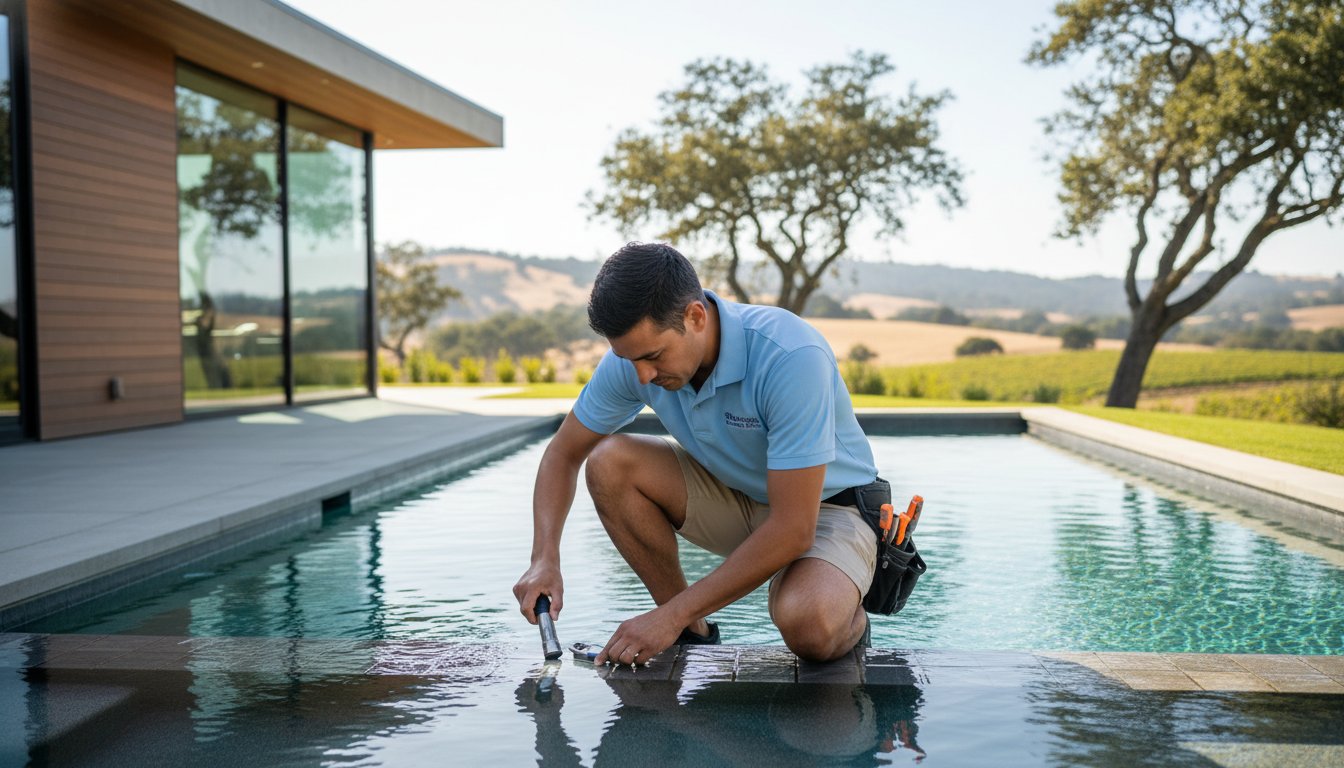
A standard home inspection often treats a swimming pool as a footnote, but overlooking a single hairline fracture in the structural shell can transform a luxury asset into a significant liability overnight. Knowing exactly what to look for in a pool inspection is the primary difference between a seamless property acquisition and an unexpected renovation project. You likely already understand that a pool is more than just a basin of water. It's a complex ecosystem of hydraulic pressure, chemical balance, and integrated technology that requires a specialized eye to verify.
We'll help you move past the confusion of technical jargon like hydrostatic pressure or salt-cell corrosion so you can protect your investment with absolute confidence. This guide provides a clear roadmap through the structural, mechanical, and safety elements that define a high-quality evaluation. You'll learn how to identify critical red flags and navigate the latest 2026 California energy and safety requirements, such as the Title 24 heat pump mandates and SB442 barrier standards. Our goal is to ensure your outdoor living space remains a source of tranquility and a tangible realization of your quality of life.
Key Takeaways
- Differentiate between minor cosmetic crazing and structural "red flag" cracks in concrete shells to prevent unforeseen renovation costs.
- Gain professional clarity on what to look for in a pool inspection by evaluating the mechanical health of pump motors and filtration efficiency.
- Ensure regional compliance by understanding the 2026 California safety requirements for self-closing gates and perimeter fencing.
- Categorize inspection findings into immediate safety hazards versus long-term maintenance items to manage your property investment with precision.
Understanding the Scope of a Professional Pool Inspection
A professional pool inspection is far more than a cursory glance at the water level or a check for surface debris. It's a comprehensive diagnostic procedure that evaluates the structural integrity and mechanical efficiency of your entire aquatic system. While a general home inspector might spend fifteen minutes checking if the pump turns on, a dedicated professional looks at the amperage draw of the motor and the pressure of the plumbing lines. Knowing what to look for in a pool inspection means understanding that "working" is not the same as "performing." A system can be operational while simultaneously being on the brink of a costly failure.
Standard home inspections frequently miss critical failures because they lack the specialized equipment needed to see beneath the surface. For instance, an inspector might observe a clean pool but fail to recognize that the swimming pool sanitation methods currently in place are masking a failing filtration system. A professional evaluation includes a functional analysis of every component, from the heater's combustion efficiency to the electrical bonding that ensures swimmer safety. This thoroughness is vital during real estate transactions or when reaching seasonal maintenance milestones to ensure the longevity of your investment.
Diagnostic vs. Visual Inspections
The primary difference between a generalist and a specialist lies in diagnostic depth. A visual inspection only confirms that equipment is present and functional at that specific moment. In contrast, a diagnostic inspection utilizes pressure testing to ensure underground plumbing lines aren't leaking into the surrounding soil. We use specialized listening devices and thermal imaging to detect issues that aren't visible to the naked eye. This level of detail is essential for identifying slow leaks or structural voids that could lead to catastrophic failure if left unaddressed. Seeing the water move isn't enough; you need to verify that the hydraulics are balanced and the vessel is watertight.
The Real Estate Factor: Why Buyers and Sellers Need Different Data
In the competitive Napa Valley real estate market, timing is everything. For buyers, a pre-purchase inspection acts as a shield against the "money pit" syndrome. Discovering a $20,000 structural issue during the contingency period allows for informed negotiations or a graceful exit. Sellers, on the other hand, benefit from a pre-listing inspection to justify a premium asking price. A clean report from an authoritative expert builds immediate trust with potential buyers, removing the uncertainty that often stalls high-value transactions. Whether you're entering a contract or planning long-term preservation, knowing what to look for in a pool inspection ensures your outdoor living space remains a source of tranquility rather than a financial burden.
Evaluating Structural Integrity and Interior Finishes
The structural integrity of a pool begins with its "bones," typically a shell of gunite or shotcrete reinforced with steel. In Northern California, the expansive nature of Napa soils presents a unique challenge for these foundations. These clay-heavy soils expand and contract with seasonal moisture changes, exerting significant pressure on the pool vessel. When determining what to look for in a pool inspection, identifying structural movement is paramount. While minor spider-web patterns, known as crazing, are often cosmetic results of the curing process, large linear cracks are significant red flags. These often indicate a compromise in the shell's ability to withstand geological shifts or seismic activity.
Coping and tile serve as more than just aesthetic accents; they are functional components that protect the pool's bond beam. We meticulously examine the waterline tile for signs of "tenting" or cracking, which often suggests that the pool shell is moving independently of the surrounding deck. If the bond beam is damaged, it can lead to water intrusion that further destabilizes the soil. Understanding what to look for in a pool inspection regarding these structural markers allows you to address minor shifts before they evolve into catastrophic failures.
Surface Conditions: Plaster, Pebble, and Quartz
The interior finish is your first line of defense against water loss and structural decay. We look for signs of delamination, which are "hollow spots" where the plaster has separated from the concrete shell. Specialized tapping tests reveal these hidden voids before they become visible peels. Calcium scaling is another vital indicator; it often reveals a history of inconsistent chemical management that may have shortened the lifespan of a Pebble Tec or quartz finish. If the finish feels excessively rough or displays significant staining, it may be nearing the end of its functional life, signaling a need for future resurfacing.
Decking and Coping Alignment
The transition between the pool and the surrounding landscape is managed by the coping and decking. A critical element often overlooked is the expansion joint, or mastic, which allows the deck and pool to move independently. If this joint is brittle or missing, water can seep behind the pool wall, leading to loose coping stones and structural decay. We also evaluate the decking for tripping hazards caused by root intrusion or soil settlement. While checking these physical barriers, it's also a good time to ensure the surrounding environment aligns with safety standards like the CPSC Safety Barrier Guidelines. If your current finish or decking shows signs of advanced wear, a professional pool remodeling and renovation assessment can help restore both safety and aesthetic harmony.
Inspecting the Heart of the Pool: Mechanical Systems and Plumbing
While the structural shell provides the vessel, the mechanical pad serves as the heart of your aquatic system. A critical element of what to look for in a pool inspection is the auditory and visual assessment of the pump and motor. A high-pitched whine often signals imminent bearing failure, while a lack of prime may indicate a compromised shaft seal or an air leak in the suction line. We evaluate flow rates to ensure the pump is sized correctly for the pool's volume, preventing unnecessary strain on the plumbing and ensuring optimal water turnover. Filtration systems also require a meticulous check. Whether the system utilizes Diatomaceous Earth (DE), sand, or cartridge filters, we look for pressure gauge inconsistencies that suggest internal manifold damage or clogged elements that could compromise water clarity.
Heater diagnostics are equally vital, especially given the specific environmental conditions of the North Bay. We inspect the heat exchanger for soot buildup, which can indicate poor combustion or a failing ignition system. Plumbing pressure is assessed by looking for "silent" indicators of trouble, such as persistent air bubbles in the return lines or moisture around the equipment pad. These symptoms often point to suction-side leaks that exist beneath the ground, requiring specialized diagnostic tools to locate without unnecessary excavation. Ensuring these mechanical components are in peak condition is essential for the long-term preservation of your investment.
Energy Efficiency and California Title 24
As of January 1, 2026, California's Title 24, Part 6 regulations have fundamentally changed the requirements for pool heating and circulation. New and remodeled pools must now utilize heat pumps or solar thermal systems as the primary heat source, moving away from traditional gas-only configurations. Any system utilizing a gas heater or heat pump must also include a pool cover to meet these stringent energy standards. During our evaluation, we verify the presence of variable-speed pumps. According to industry data from M&M Pool Builders in March 2026, these modern pumps can reduce a pool's energy consumption by up to 50%. Modernizing these components during a remodel is often a more cost-effective path than attempting to maintain obsolete, inefficient machinery.
Automation and Smart Controls
Modern luxury pools rely on sophisticated automation to maintain water quality and aesthetic features. We test wireless control systems and mobile app connectivity to ensure you can manage your pool’s environment with ease. Our inspection includes a thorough check of salt-water chlorine generators, specifically looking for corrosion or calcium bridge formation in the salt cells. We also verify the operation of automated valve actuators. These motors are responsible for directing water flow to features like waterfalls or spa jets, and their failure can disrupt the entire hydraulic balance of the system. Understanding these mechanical nuances is a cornerstone of what to look for in a pool inspection to ensure seamless, reliable operation.

Safety Standards and Regional Compliance Requirements
The legal landscape of aquatic ownership is defined by stringent safety mandates designed to protect the most vulnerable. According to the CDC, drowning remains the leading cause of unintentional injury-related death for children between the ages of 1 and 4. This reality underscores why understanding what to look for in a pool inspection must prioritize compliance with the California Pool Safety Act (SB442). For any new or remodeled pool in Napa or Sonoma, the law requires a perimeter barrier of at least 5 feet in height alongside at least two other approved safety features. These features range from exit alarms on doors leading to the pool area to self-closing, self-latching mechanisms on all access gates.
Beyond physical barriers, we verify anti-entrapment compliance through the inspection of VGB-compliant drain covers. These specialized covers are engineered to prevent the powerful suction of a pool pump from trapping a swimmer, a critical safety element that must be replaced according to the manufacturer’s expiration date. Electrical safety is another pillar of a thorough evaluation. We test Ground Fault Circuit Interrupters (GFCIs) and examine the underwater lighting bonds to ensure that every electrical component is properly integrated into the home's safety system. If you're concerned about the compliance of your current setup, our expert team provides comprehensive pool inspections for real estate and private ownership to ensure total peace of mind.
Barriers and Alarms
Local municipal codes in the North Bay often mirror or exceed state requirements. We verify that all gates open outward, away from the pool, and that self-latching mechanisms are positioned at least 54 inches above the ground to remain out of reach for small children. For homeowners who prefer an unobstructed view, automatic pool covers serve as a primary safety barrier, provided they meet ASTM F1346 standards. This certification ensures the cover can support at least 415 pounds, the equivalent of two adults and one child. We also assess the functionality of door and pool surface alarms, which provide an essential secondary layer of notification should a barrier be breached.
Electrical Grounding and Bonding
Bonding is perhaps the most technical yet vital safety element we evaluate. While grounding protects against electrical faults, bonding connects all metal components around the pool to create an equal electrical potential, preventing stray voltage from passing through a swimmer. We check for corrosion on light niches, metal ladders, and handrails, as these are often the first signs of a compromised bonding grid. Ensuring that your equipment is properly grounded and bonded is not just a matter of code; it's a fundamental requirement for a safe swimming environment. Knowing what to look for in a pool inspection regarding these invisible systems is what separates a standard check from a professional diagnostic.
Interpreting Your Report and Planning Future Improvements
Receiving a technical diagnostic report can feel overwhelming, especially when terms like hydraulic head pressure or bonding continuity appear alongside identified defects. The key to interpreting these findings is to remain calm and methodical. A professional report isn't a list of reasons to walk away from a property; it's a transparency tool that defines the current health of your investment. By understanding what to look for in a pool inspection report, you can separate immediate safety hazards from items that simply require routine attention over the next few seasons. This clarity allows you to transition from a conceptual understanding of the vessel to a tangible, well-maintained outcome.
Categorizing findings is the first step toward a clear action plan. We typically group items into three tiers to help you prioritize your next steps. Immediate safety or structural hazards, such as non-compliant drain covers or active shell leaks, require your first attention. Functional repairs involve equipment that's operational but nearing the end of its life, like a noisy pump motor or a scaled heater. Finally, aesthetic and long-term maintenance items, such as minor plaster staining or outdated tile, don't affect the pool’s immediate safety. This structured approach builds trust by demonstrating a comprehensive oversight of the entire system.
Prioritizing Repairs
During a real estate transaction, identifying "deal breakers" early is essential for your peace of mind. Structural shell failures or outdated electrical systems often fall into this category because of their impact on long-term stability. You can use a professional contractor’s estimate to negotiate repair credits, ensuring the purchase price reflects the pool’s true condition. This data also allows you to plan for future aesthetic upgrades. If the bones of the pool require repair, it's often the most cost-effective time to initiate a custom remodel. This ensures the mechanical and structural repairs happen simultaneously with your vision for a more modern outdoor living space.
The Paradise Pools, Inc. Advantage
With over 45 years of experience in the Napa Valley landscape, we bring a builder’s perspective to every evaluation. We see the subtle signs of soil movement and equipment fatigue that a general home inspector often misses. Our institutional knowledge of local geology and California’s evolving energy codes ensures your report is both accurate and actionable. We act as your trusted guide, simplifying complex tasks and offering reliable support for the life of your pool. To protect your investment with the precision it deserves, Schedule your professional inspection with Paradise Pools, Inc. today.
Securing Your Investment with Expert Oversight
A swimming pool is a defining feature of the North Bay lifestyle, but its long-term value depends entirely on the verification of its core systems. Understanding what to look for in a pool inspection ensures that the structural nuances and mechanical efficiencies discussed in this guide are properly documented. By moving beyond surface-level aesthetics to evaluate hydraulic performance and regional code compliance, you secure a property that offers genuine peace of mind and lasting quality.
Paradise Pools, Inc. leverages over 45 years of custom construction expertise to provide the clarity required for high-value real estate transactions. Our deep familiarity with the specific soil conditions of Napa and Sonoma Counties allows us to provide the comprehensive oversight that generalists often miss. When you're ready to move from uncertainty to a well-maintained outcome, Request an Expert Pool Inspection from Paradise Pools, Inc. We're committed to acting as your trusted guide throughout the life of your aquatic investment.
Frequently Asked Questions
How much does a professional pool inspection cost in Napa Valley?
Professional pool inspection fees vary based on the pool's size, age, and the complexity of the integrated equipment. While general home inspectors might offer a flat rate for a basic visual check, a comprehensive diagnostic from a specialized contractor reflects the depth of the technical evaluation. Factors like the number of water features, the presence of a spa, and the sophistication of automation systems will influence the final scope of the service.
Does a standard home inspection include the pool and spa?
Most standard home inspections only offer a cursory visual overview of the pool's exterior surfaces. They don't typically include a diagnostic assessment of the mechanical pad, electrical bonding, or hydraulic pressure. To truly understand what to look for in a pool inspection, you need a specialist who can evaluate the structural bones and the mechanical heart of the system beyond what a generalist can see.
How long does a comprehensive pool inspection typically take?
A thorough evaluation of a residential pool and spa typically requires between one and two hours to complete. This timeline allows our experts to cycle through every piece of equipment, test the automation, and inspect the structural integrity of the shell and decking. Larger estates with multiple water features or complex infinity edges may require additional time to ensure every technical detail is documented correctly.
What are the most common "deal breakers" found during a pool inspection?
The most significant deal breakers usually involve major structural compromises or obsolete mechanical systems that are no longer compliant with current codes. Large linear cracks in the gunite shell or a completely failing electrical bonding grid can lead to substantial repair requirements. Discovering these issues early allows buyers to make informed decisions about the long-term viability of the property before closing.
Do I need to be present during the pool inspection?
While your presence isn't strictly required, we highly recommend attending the final portion of the inspection for a verbal walk-through. This provides an opportunity to see the equipment in operation and ask specific questions about the report's findings. It's the best way to gain a practical understanding of the pool’s current condition and any necessary maintenance routines for the future.
What happens if the pool inspector finds a leak?
If an inspector identifies signs of a leak, such as significant water loss or moisture around the equipment pad, they'll recommend a specialized leak detection service. While a standard inspection identifies the symptoms, a dedicated leak detection process uses pressure testing and sonic equipment to pinpoint the exact location of the breach. This ensures that any subsequent repairs are targeted and efficient.
Are pool inspectors required to be licensed in California?
In California, professional pool inspections should be conducted by experts who hold a C-53 Swimming Pool Contractor license. This ensures the individual has the institutional knowledge required to evaluate complex hydraulic and electrical systems according to state safety standards. Working with a licensed professional provides a layer of accountability and expertise that general handymen or home inspectors don't offer.
Can a pool inspection report be used to negotiate a lower home price?
A detailed inspection report is a powerful tool for negotiating repair credits or a lower purchase price during the contingency period. By providing a clear, itemized list of necessary repairs and safety upgrades, you can justify a price adjustment that reflects the pool’s true condition. Understanding what to look for in a pool inspection ensures you have the data needed to protect your financial interests during a real estate transaction.


