
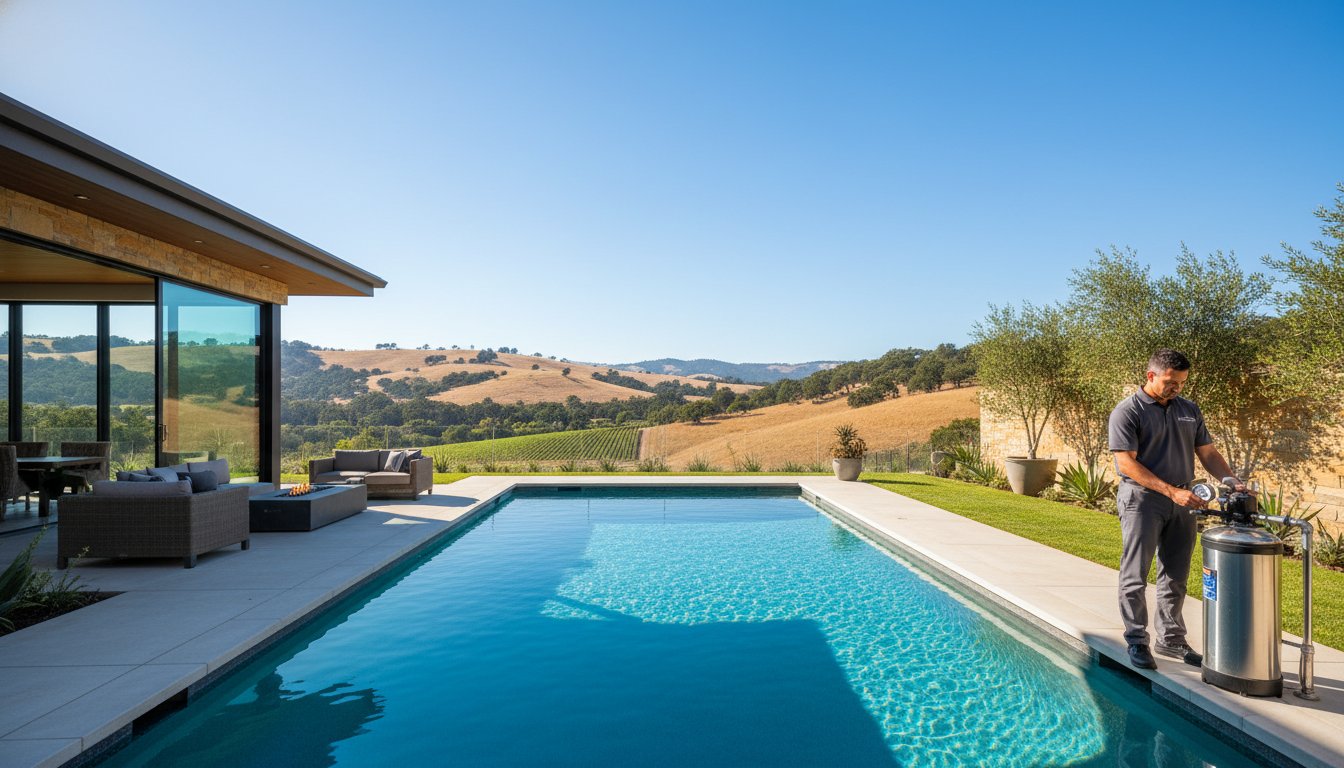
Maintaining a pool in Sonoma isn't just about skimming the surface; it's a precise discipline of managing a micro-ecosystem influenced by viticultural dust, oak debris, and intense Northern California UV exposure. With over 1.4 million residential pools across the state, the demand for quality care is high, yet local owners face specific environmental hurdles that others don't. You likely understand the frustration of watching your water turn tea-colored after a windstorm drops tannins from nearby oaks, or seeing chlorine levels vanish during a relentless July heatwave. It often feels like a constant struggle against the elements to keep your backyard oasis pristine and inviting.
This guide offers the specialized expertise you need to master the consistent pool maintenance Sonoma requires for lasting results. We'll show you how to manage local high calcium hardness, protect your equipment from expensive long-term repair costs, and ensure a safe environment for your family. By following a methodical, professional approach to care, you can transition from reactive cleaning to effortless, year-round clarity. We will examine the specific steps to stabilize your water chemistry and maintain your equipment against the backdrop of our beautiful, demanding regional climate.
Key Takeaways
- Learn how Sonoma’s Mediterranean climate and vineyard dust impact your water chemistry and filter saturation levels.
- Master the "Big Three" of chemistry to establish a consistent routine for pool maintenance sonoma that prevents algae blooms before they start.
- Discover the optimal turnover rate for your pump to ensure every drop of water stays crystal clear while maintaining energy efficiency.
- Adapt your care schedule to handle intense summer heatwaves and the aggressive debris management required during Northern California’s autumn leaf drop.
- Identify the specific "red flags" that signal when a professional diagnostic visit is necessary to protect your pool’s long-term integrity.
The Sonoma Pool Ecosystem: Why Local Climate Dictates Your Routine
Sonoma's landscape is iconic, but for a pool owner, it presents a complex set of environmental variables. The Mediterranean climate, characterized by warm, dry summers and cool, wet winters, creates a unique set of challenges for swimming pool sanitation and overall water balance. High evaporation rates during our frequent heatwaves don't just reduce water levels; they concentrate dissolved solids and minerals. This makes your water chemistry significantly more volatile than it would be in a more temperate region.
Intense UV exposure in Northern California is another constant hurdle. Without the right level of stabilization, the sun can deplete your free chlorine levels in just a few hours. This rapid degradation leaves your pool vulnerable to pathogens and organic growth. It requires a disciplined approach to pool maintenance sonoma residents can rely on to keep their water safe and clear. Consistency is the only way to stay ahead of these rapid shifts in chemistry.
Native oaks are a staple of our local beauty, yet they're a primary source of acidic debris. When oak leaves and tassels fall into the water, they release tannins. These organic compounds can tea-stain your plaster and aggressively pull down your pH levels. Constant skimming and basket clearing are essential. If you let these natural elements sit on the bottom, they'll create stubborn stains that are difficult to remove without professional intervention.
The Impact of Vineyard Dust and Agricultural Runoff
Nearby viticulture adds another layer of complexity to your filtration needs. During tilling season, fine particulate matter from vineyards drifts across the valley. This dust is often finer than standard backyard soil. It saturates DE and cartridge filters at an accelerated rate, leading to frequent pressure spikes. Owners should also monitor phosphate levels regularly. Windblown fertilizers from surrounding farms can inadvertently "feed" algae, making a standard chemical routine less effective. Using a fine-mesh skimmer can help capture these particulates before they settle into the filter media.
Managing Sonoma’s "Hard" Water Profile
Sonoma County's water profile is naturally high in calcium hardness. When you top off your pool to combat evaporation, you're introducing more minerals into an already saturated environment. This "fill and spill" cycle is a leading cause of unsightly scale along the waterline and inside your plumbing. Managing this effectively requires an understanding of the Langelier Saturation Index (LSI). By balancing pH and alkalinity against temperature and calcium levels, you can prevent the water from becoming corrosive or scale-forming. This scientific approach is the hallmark of expert pool maintenance sonoma professionals use to preserve the longevity of your pool's finish.
Master the Essentials: A Step-by-Step Guide to Weekly Pool Chemistry
Achieving a pristine swimming environment requires more than just a passing interest in water chemistry; it demands a methodical approach. In our region, the interplay between high afternoon temperatures and intense UV rays can destabilize your water in a matter of hours. By establishing a rigorous schedule for pool maintenance sonoma owners can catch chemical drift before it evolves into a costly algae bloom. Success begins with understanding the specific order of chemical additions and the role of Cyanuric Acid (CYA). In our local climate, CYA acts as a sunscreen for your chlorine, preventing the sun from stripping your sanitizer away in a single afternoon.
Step 1: Testing and Analyzing Your Baseline
While basic test strips offer a quick glance, they often lack the precision required for high-end pool care. Professional-grade liquid reagent kits provide the accuracy needed to manage Sonoma’s unique water profile. When testing, always submerge your sample container 18 inches below the surface and away from any return jets. This ensures you're measuring the bulk of the water rather than the sun-warmed surface. When daytime temperatures exceed 90°F, these readings become even more critical, as heat accelerates chemical consumption and bacterial growth.
Step 2: Adjusting Alkalinity and pH
Total Alkalinity serves as the structural foundation for your water's stability. You must adjust this level before addressing pH to prevent "pH bounce," a frustrating cycle where levels shift erratically. The ideal pH range for both swimmer comfort and the protection of your plaster and equipment is 7.4 to 7.6. When lowering pH, adding muriatic acid requires a steady hand. Always pour it slowly into the deep end while the pump is running to ensure immediate distribution. This meticulous care prevents the acid from settling and damaging the pool’s finish.
Step 3: Sanitization and Shocking
Sanitization is your primary defense against contaminants. It's essential to distinguish between Free Chlorine, which actively kills bacteria, and Combined Chlorine, the spent byproduct that causes odor and irritation. If your Combined Chlorine levels rise, you'll need to perform a "breakpoint shock" to reset the balance. This is especially true after a weekend of heavy use or a sudden temperature spike. While traditional methods are effective, many modern Sonoma builds now include UV or Ozone systems to provide supplemental sanitation. If you find these chemical nuances complex, a structured plan for pool maintenance sonoma can provide the consistency your investment deserves.
Beyond the Surface: Managing Filtration and Circulation
While chemistry balances the water, circulation preserves the system's infrastructure. Effective pool maintenance sonoma requires a deep understanding of your system's turnover rate. This metric defines the time it takes for every gallon of water in your pool to pass through the filter. In an environment where vineyard dust and oak debris are daily realities, achieving at least one full turnover every 24 hours is essential. Without consistent flow, even chemically balanced water will eventually become stagnant. This leads to debris accumulation and unnecessary strain on your pump and plumbing.
Debris management extends beyond what you can see on the surface. You must regularly inspect "hidden" traps, such as the skimmer baskets and the pump pot basket. If these become clogged with Sonoma’s characteristic oak leaves, they restrict water flow. This restriction forces the pump to work harder, increasing heat and potentially shortening the lifespan of the motor. Monitoring your filter’s pressure gauge is the most reliable way to gauge system health. A rise of 8 to 10 PSI above your clean baseline is a clear signal that the system is struggling and requires immediate attention.
The Heart of the Pool: Pump Efficiency
The heart of your circulation system is the pump. In California, where energy rates are among the highest in the nation, the transition to Variable Speed Pumps (VSPs) has become a standard for savvy owners. These units allow you to program lower RPMs for longer durations. This methodical approach filters the water more thoroughly than a high-speed blast while drastically reducing your utility bill. It’s also vital to listen for signs of pump stress. Cavitation, which sounds like marbles rattling inside the pump, or air bubbles visible in the pump pot, often indicates a suction line leak or a blockage that needs professional evaluation.
Filter Maintenance: DE, Sand, and Cartridge
Your filter is the final line of defense against the fine particulates common in the North Bay. Sonoma pools typically utilize one of three systems: DE, sand, or cartridge filters. DE filters provide the finest filtration but require a specific backwashing process to clear the spent powder and debris. When backwashing, monitor the sight glass and stop as soon as the water runs clear to avoid wasting local water resources. Cartridge filters, by contrast, offer a larger surface area but need a thorough chemical soak at least once a year to remove accumulated oils and minerals. Regardless of your filter type, maintaining a clean medium ensures that your pool maintenance sonoma routine remains effective and your water stays crystal clear.

Seasonal Adaptations: Protecting Your Pool Year-Round
Sonoma's distinct seasonal cycles require more than a one-size-fits-all approach to water care. While the summer months demand a focus on high bather loads and rapid evaporation, the cooler months present their own technical challenges. A truly effective routine for pool maintenance sonoma homeowners can rely on must evolve as the thermometer shifts. During our intense July and August heatwaves, your chemistry can drift overnight. Weekend guests and higher water temperatures naturally deplete sanitizer levels, making a mid-week chemical check essential to prevent the water from turning cloudy before the next weekend arrives.
As we transition into spring, the "open" phase becomes critical. As water temperatures begin to climb back toward 70°F, dormant algae spores can quickly bloom if phosphate levels aren't managed. This period requires a meticulous baseline balance to ensure your system is ready for the upcoming swim season. It's the ideal time to inspect your equipment for any wear that occurred during the winter months, ensuring that your heaters and automation systems are fully operational before the first heatwave hits.
Fall Debris Strategy: Battling Oak and Eucalyptus
The Northern California "leaf drop" is perhaps the most demanding period for any pool owner in the valley. Organic debris from native oaks and eucalyptus trees must be removed within 24 hours to prevent permanent plaster staining. These leaves release heavy tannins that can discolor your finish if they're allowed to settle on the floor. During peak drop, you should empty skimmer baskets daily. A clogged basket restricts flow, which can lead to pump burnout and expensive equipment repairs. Utilizing professional pool cover installation and repair can significantly reduce this burden by keeping the majority of organic matter out of the water entirely.
Winterizing in the North Bay
Pools in Sonoma County rarely require a full "closing" or draining, but they do need adjusted run-times and chemistry. When water temperatures drop below 60°F, algae growth slows significantly, allowing you to reduce chlorine output. However, for those living in the Mayacamas foothills or lower valley floors, freeze protection is a vital concern. Modern automation systems should be programmed to circulate water whenever temperatures approach freezing. This movement prevents water from expanding and cracking your plumbing or equipment headers. It's a simple setting that provides a sense of permanent, reliable support during our coldest winter nights.
Professional Stewardship: When to Call the Sonoma Experts
Identifying the threshold between routine upkeep and specialized intervention is a hallmark of responsible ownership. While a consistent schedule handles the basics, certain "red flags" demand the precision of an established authority. If you notice rapid water loss exceeding standard evaporation rates, persistent cloudiness, or unusual equipment noise, it's time for a diagnostic visit. Professional pool maintenance sonoma experts provide more than just a clean surface; they offer a safeguard for the 20-year lifespan of your custom plaster and tile. This expert oversight prevents minor chemical drifts from becoming permanent structural damage.
A seasonal "Base Balance" is another area where professional expertise proves invaluable. As we've explored, Sonoma's water is naturally hard and prone to scaling. A professional can reset your LSI and chemical levels at the start of each season, simplifying your weekly tasks and preventing the long-term mineral buildup that destroys heaters and automation components. This methodical oversight ensures your environment remains a tangible realization of the quality of life you've built, rather than a source of stress.
The Real Estate and Long-Term Value Angle
In the competitive Sonoma real estate market, documented maintenance logs are a significant asset during property transactions. They demonstrate a commitment to structural integrity and equipment longevity that discerning buyers value. Professional inspections for real estate go beyond the surface, identifying potential leaks or circulation issues before they become liabilities. Paradise Pools, Inc. leverages over 45 years of local environmental data to predict and prevent equipment failure. This institutional knowledge allows us to act as a stabilizing force for your property's value, ensuring every detail has been considered.
Customized Service for Vacation and Second Homes
Absentee owners face unique challenges in keeping their retreats "guest-ready" throughout the year. Remote monitoring through advanced pool automation systems allows you to manage heaters, lighting, and pump speeds from anywhere in the world. This ensures that when you or your guests arrive, the environment is pristine and welcoming. Professional pool maintenance sonoma stewardship offers a sense of permanent, reliable support, simplifying intricate tasks and offering peace of mind. To ensure your investment is preserved with meticulous attention to detail, Schedule your professional Sonoma pool consultation with Paradise Pools, Inc.
Securing the Future of Your Sonoma Retreat
Mastering the intricacies of a pool in the North Bay is a journey from reactive cleaning to proactive preservation. By understanding the unique interplay between vineyard dust, oak tannins, and intense UV exposure, you can maintain a crystal-clear environment year-round. Consistent pool maintenance sonoma owners implement doesn't just provide a beautiful view; it protects your investment against the corrosive effects of hard water and the mechanical strain of seasonal debris. Whether you're managing a vacation home or a primary residence, a structured approach to chemistry and circulation ensures your pool remains a reliable source of joy.
At Paradise Pools, Inc., we've been family-owned and operated since 1978. Our team brings comprehensive expertise in both custom construction and long-term care to every project. We possess specialized knowledge of North Bay soil and climate conditions, allowing us to act as a steady, expert hand in a specialized field. Ensure your Sonoma pool remains a pristine oasis-contact Paradise Pools, Inc. for expert maintenance today. Your backyard sanctuary deserves nothing less than meticulous, professional attention. Enjoy the peace of mind that comes with a perfectly maintained pool.
Frequently Asked Questions
How often should I test my pool water in Sonoma?
You should test your water at least twice weekly during the peak swim season. Sonoma’s high UV exposure and frequent afternoon heatwaves can deplete sanitizer levels in a matter of hours. Regular testing allows you to catch minor chemical drifts before they evolve into algae blooms or mineral scaling. During the cooler winter months, a weekly testing schedule is typically sufficient to maintain a stable baseline.
What is the best way to remove oak tree stains from my pool plaster?
Organic tannin stains from oak leaves are best treated with a localized application of granular chlorine or a specialized citric acid-based remover. These stains often set if debris remains on the floor for more than 24 hours. After applying the treatment, brush the area vigorously with a stiff pool brush. This mechanical action helps lift the discoloration from the plaster pores without compromising the integrity of the finish.
Can I use a salt system with Sonoma’s hard water?
Yes, salt systems are compatible with local water, provided you actively manage the high calcium hardness levels. Sonoma’s tap water naturally contains elevated mineral content, which can cause rapid scale accumulation on the salt cell’s electrolytic plates. You'll need to inspect and clean the cell more frequently than in other regions. Using a sequestering agent helps keep these minerals in suspension, protecting your equipment from premature failure.
How long should I run my pool pump during a Sonoma heatwave?
Increase your circulation time to at least 10 to 12 hours daily when temperatures exceed 90°F. Heat accelerates both bacterial growth and the consumption of chemicals, making constant flow essential for pool maintenance sonoma standards. If your system utilizes a variable speed pump, you can run it at lower RPMs for a longer duration. This methodical approach ensures a full turnover while keeping your energy costs manageable during peak utility pricing.
Why is my pool losing water? (Evaporation vs. Leak)
Perform a "bucket test" to determine if your water loss is due to a leak or natural evaporation. Place a bucket of water on the top step and mark the levels both inside the bucket and in the pool. After 24 hours, compare the two. If the pool level has dropped significantly more than the bucket level, you likely have a leak. In dry Sonoma summers, losing a quarter-inch of water daily to evaporation is quite common.
Is it cheaper to maintain my own pool or hire a service in Sonoma?
While DIY care saves on labor, professional service often reduces long-term costs by preventing expensive equipment repairs and plaster resurfacing. With Bay Area monthly service rates typically ranging from $145 to $180, the investment covers specialized chemicals and expert LSI balancing. A professional ensures your system operates at peak efficiency, which can extend the lifespan of your pump and heater by several years compared to inconsistent self-maintenance.
What should I do to my pool after a heavy North Bay rainstorm?
Skim out all organic debris immediately and test your pH and total alkalinity. Rainwater in our region is often acidic and can rapidly lower your pool's pH, creating a corrosive environment for your equipment. If you need to drain excess water, remember that local regulations require discharge into a sanitary sewer cleanout. Improper drainage into storm drains can result in significant fines, so following the correct disposal path is vital.
How do phosphates from nearby vineyards affect my pool?
Phosphates act as a primary nutrient for algae, allowing it to thrive even when chlorine levels appear adequate. Windblown dust and agricultural runoff from surrounding vineyards can introduce these compounds into your water. Monitoring and removing phosphates is a critical component of pool maintenance sonoma routines. Keeping these levels near zero simplifies your chemical needs and ensures your water remains crystal clear despite the environmental pressures of our agricultural landscape.


