
In the rolling hills of St. Helena or the serene valley floors of Yountville, the real cost to build a pool napa valley homeowners encounter is often determined by what lies beneath the vineyard views. You likely understand that a luxury aquatic project involves more than just excavation; however, the opaque pricing often found in the high-end market can feel like a moving target. It's common to feel a sense of hesitation when faced with the region's complex hillside engineering requirements and the meticulous oversight of Napa County's building departments.
This guide offers a clear, methodical framework for your 2026 budgeting process, ensuring you move from a conceptual vision to a tangible, lasting outcome with confidence. We provide a comprehensive breakdown of the investment factors unique to our local terrain, including the impact of the July 2025 permit fee increases and the specific requirements of the California Pool Safety Act. You'll gain a realistic perspective on how to manage geotechnical demands and select a builder who prioritizes the craftsmanship and stability your estate deserves.
Key Takeaways
- Distinguish between standard construction and custom estate projects to understand why national cost averages don't apply to the Northern California market.
- Identify the specific engineering and permitting requirements that influence the total cost to build a pool napa valley homeowners should plan for in 2026.
- Evaluate the long-term durability and aesthetic value of premium finishes and architectural features like infinity edges or perimeter overflows.
- Learn how to calculate a comprehensive five-year budget that includes energy-efficient equipment and routine maintenance to protect your investment.
- Discover how a builder's deep understanding of Napa’s unique soil and topography ensures a seamless transition from technical design to a finished, stable outcome.
Understanding the Napa Valley Pool Investment Landscape
Building a pool in wine country is an exercise in architectural integration. While a "standard" pool might focus on basic utility, a Napa custom estate pool serves as a permanent extension of your home’s footprint. It's a sophisticated structure designed to harmonize with the surrounding topography and vineyard views. In this market, the cost to build a pool napa valley residents experience is driven by a commitment to longevity and meticulous craftsmanship rather than simple square footage. Your investment is categorized into distinct phases: design, engineering, construction, and high-end finishes.
National Averages vs. Northern California Reality
You've likely seen national figures suggesting an in-ground pool costs around $66,000. These averages are fundamentally misleading for Northern California homeowners. The "Napa Premium" is a tangible reality rooted in several factors: higher labor rates, complex logistics for material transport, and a specialized pool of qualified builders. Napa remains one of the highest-paying regions for pool construction labor in the state. As of 2026, regional labor shortages continue to extend project timelines, making the expertise of an established builder a critical asset for maintaining project stability.
Geology plays a silent but significant role in your investment. Many properties in the valley sit atop the Sonoma Volcanics, a geological formation that provides the parent material for our unique soils. While excellent for viticulture, these rocky conditions often require specialized excavation equipment and advanced engineering. This isn't just about digging a hole; it's about navigating a complex subterranean environment to ensure your pool remains a stable feature of your estate for decades. These site-specific challenges mean that engineering and site preparation are often the most variable parts of your budget.
The Aesthetic Standard of Wine Country
In Napa, a pool is rarely a standalone feature. It's the centerpiece of an expansive outdoor living room that incorporates kitchens, fire features, and custom lighting. This shift toward total site integration increases design complexity. Custom design fees are a necessary upfront investment, ensuring that the pool’s placement respects existing architecture and maximizes property appreciation. A well-executed project doesn't just provide a place to swim. It enhances the overall valuation of a luxury estate by creating a seamless, high-end lifestyle experience that resonates with the regional context.
The Hidden Drivers: Engineering, Permitting, and Site Prep
When calculating the cost to build a pool napa valley homeowners often focus on the visible elements like tile and water features. However, the most significant budget drivers are frequently invisible. These include the rigorous engineering and permitting requirements that define construction in the North Bay. Unlike flatter regions, our local geography demands a high level of structural precision. Every project begins with a deep dive into the site’s specific constraints, from drainage management to soil stability. These early phases ensure your pool remains a permanent, trouble-free asset rather than a source of future liability.
Geological surveys and structural engineering are non-negotiable here. Local builders must account for seismic activity and the unique movement of our clay-heavy soils. Consulting the USGS geologic map of Napa County reveals a complex network of fault lines and varying rock formations that dictate how a foundation must be designed. This technical oversight adds to the initial investment, but it prevents the structural cracking that can plague less meticulously planned projects. Working with a team that understands these subterranean variables is the best way to ensure a seamless construction experience from the first excavation to the final inspection.
Hillside Construction and Expansive Soils
Building on a slope introduces a specific set of engineering challenges. To ensure long-term stability on a Napa hillside, we often utilize a pier and beam foundation. This involves drilling deep concrete piers into the stable substrate or bedrock to support the pool’s weight, effectively anchoring it against gravity and soil creep. These structural requirements, along with the necessary retaining walls and advanced drainage systems, represent a significant portion of the site preparation budget. They're essential for protecting both the pool and the integrity of your home’s landscape.
The Permitting and Compliance Timeline
The regulatory landscape in Napa County underwent significant changes recently. As of July 7, 2025, building permit fees increased by 17-26%, and a 7.5% surcharge is now applied to all permits to fund the General Plan update. Additionally, the Fire Marshal fee for plan reviews has risen to 50% of the building inspection fee. Compliance also involves meeting the California Pool Safety Act (SB442), which requires at least two approved safety features, such as automated covers or specific fencing. Navigating these requirements requires a builder with a proven track record of successful municipal coordination to keep your project on schedule.
Materials and Features: Customizing Your Budget
Once the technical foundation is established, your attention shifts to the aesthetic and functional elements that define an estate's character. While structural engineering provides the necessary stability, your choice of materials determines the daily experience and the long-term preservation of the vessel. The cost to build a pool napa valley homeowners encounter often fluctuates based on the tier of finishes and the sophistication of integrated technology. Selecting high-end materials isn't merely about visual appeal; it's a strategic decision to ensure the installation thrives in the specific Northern California climate.
Gunite vs. Alternative Structures
Gunite remains the gold standard for custom Napa Valley estates because it offers unparalleled design flexibility and structural integrity. Unlike fiberglass or vinyl, gunite allows for the creation of site-specific shapes that follow the natural contours of a vineyard or hillside. The interior finish you choose for this structure dictates both the initial investment and the future maintenance schedule. While traditional plaster is a classic choice, many homeowners now opt for premium aggregate finishes like Pebble Tec. A Pebble Tec finish typically lasts between 15 and 25 years in the California climate, offering superior resistance to chemical wear and UV exposure compared to standard plaster. Darker interior finishes, such as deep charcoals or midnight blues, are a prominent 2026 trend. These shades create a dramatic, lagoon-like aesthetic while naturally absorbing solar heat to reduce energy requirements.
Luxury Additions and Vineyard Aesthetics
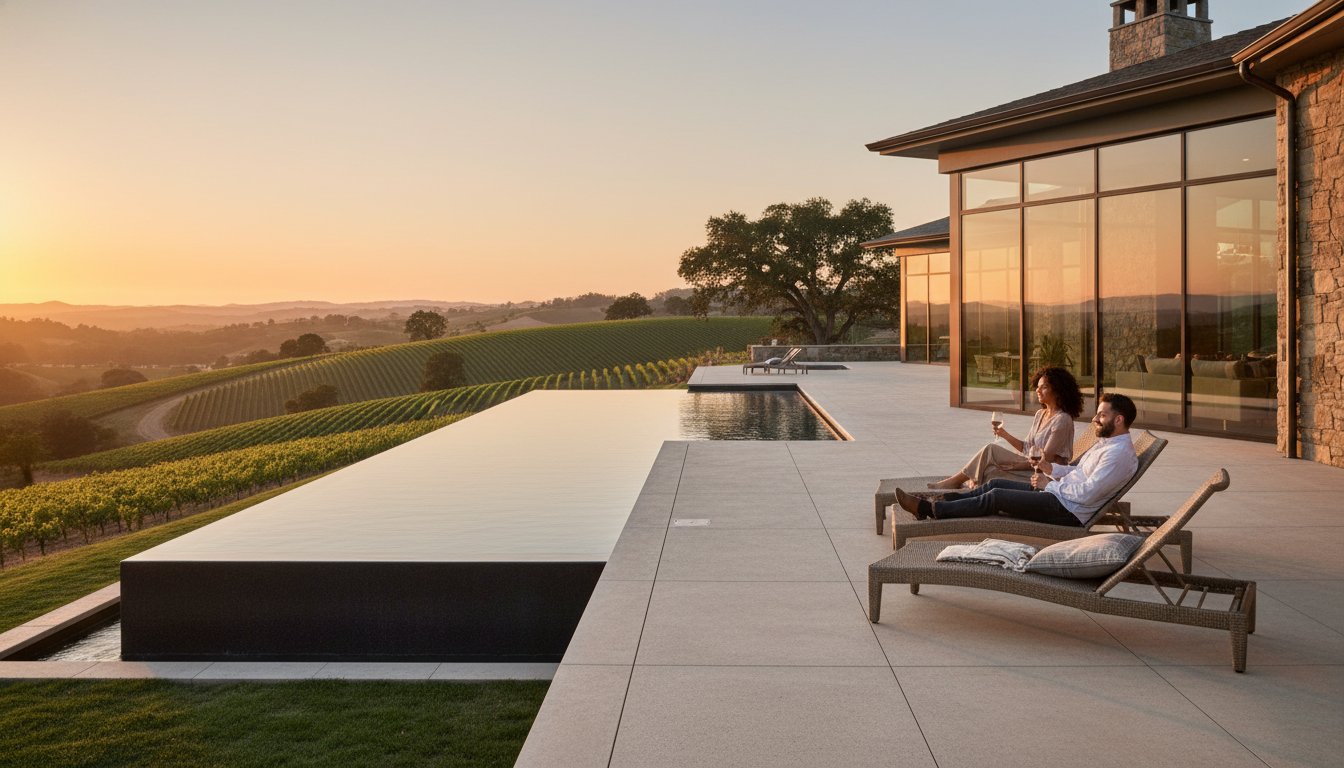
To truly capture the essence of wine country, many designs incorporate features that blur the line between the water and the horizon. Vanishing edges, also known as infinity edges, are a popular choice for properties with elevation changes, though they require precise hydraulic engineering and additional catch basins. These features, along with perimeter overflows, represent a higher level of craftsmanship and investment. Other value-added features include:
- Baja Shelves: These shallow tanning ledges provide a resort-style lounge area within the pool.
- Integrated Spas: Custom-built spas that utilize the same masonry and finishes as the main pool for a cohesive look.
- Smart Automation: Mobile app controls for heating, lighting, and filtration are now a standard expectation for 2026 luxury builds.
- Natural Stonework: Using oversized porcelain or local stone for decking to ensure slip resistance and aesthetic harmony.
The cost to build a pool napa valley residents will appreciate for years involves balancing these aspirational desires with practical efficiency. High-efficiency variable-speed pumps and automated pool covers are essential components that protect your investment by lowering monthly operational expenses and meeting strict California energy codes.

The Long-Term Budget: Maintenance and Energy Costs
Calculating the cost to build a pool napa valley residents should anticipate involves more than the final construction invoice. To protect a high-end investment, you must account for a five-year operational budget that covers energy, chemicals, and specialized care. While modern equipment often carries a higher upfront price, these components are designed to lower monthly expenses and ensure the longevity of your pool’s custom finishes. A methodical approach to equipment selection ensures your estate remains a place of relaxation rather than a source of technical frustration.
Energy Efficiency and Solar Integration
Napa’s Mediterranean climate provides an excellent opportunity to utilize solar heating systems. These installations extend your swimming season into the shoulder months without the heavy utility costs associated with traditional gas heaters. Under 2026 California energy regulations, variable speed pumps have become a standard requirement for all new builds. These units operate at lower speeds for longer periods, consuming significantly less electricity than older, single-speed models. When integrated with professional pool automation systems, these pumps adjust based on the specific needs of your filtration and water features, reducing unnecessary wear on the internal components.
Automatic pool covers are another critical component for energy preservation. By acting as a thermal barrier, they prevent heat loss during our cool valley nights and reduce water evaporation by up to 95%. This preservation of water and heat directly translates to lower chemical consumption and reduced heater run times. It's a functional addition that pays for itself through reduced operational overhead and simplified maintenance cycles.
Professional Maintenance vs. DIY
The sophisticated equipment and delicate masonry used in luxury estate pools require a level of expertise that goes beyond basic skimming. Professional oversight ensures that water chemistry is balanced with precision, preventing the scale buildup or etching that can ruin a premium plaster or Pebble Tec finish. Investing in Weekly Pool Maintenance provides the "white-glove" attention necessary to identify minor issues before they escalate into costly structural repairs. This consistent support acts as a stabilizing force for your property's value.
Preventative care is the most effective way to manage the long-term cost to build a pool napa valley families will enjoy for decades. Regular inspections of automation sensors, heater manifolds, and salt cells allow for proactive replacements, ensuring your outdoor sanctuary remains operational and pristine throughout the year. Choosing a partner who understands the specific mineral content of Napa’s water and the demands of our local environment is essential for maintaining the high standards of a wine country estate.
Selecting a Builder Who Understands the Napa Terrain
The selection of a builder is the final, most critical variable in the cost to build a pool napa valley homeowners must navigate. While the previous sections detailed the technical and regulatory drivers, the successful execution of these elements depends entirely on the expertise of your construction partner. A builder with deep roots in the region acts as a stabilizing force; they manage the complex interplay between engineering requirements and municipal oversight with a steady hand. This specialized knowledge ensures that the high-end vision you have for your estate is realized with precision and structural integrity.
Paradise Pools, Inc. manages the end-to-end complexity of Wine Country projects by acting as a trusted guide through every phase of development. From the initial custom pool design and construction to the final lighting installation, a "design-build" firm offers a seamless experience by consolidating project management. This model reduces the risk of communication gaps between architects and engineers, ensuring that every detail is handled with meticulous attention. It's a structured approach that builds trust by demonstrating comprehensive oversight of the entire process.
The Value of Local Institutional Knowledge
Builders from outside the North Bay often struggle with the specific nuances of Napa’s volcanic soil and the strict expectations of city councils in St. Helena or Calistoga. Established relationships with Napa County inspectors are invaluable for maintaining project momentum and ensuring compliance without unnecessary delays. As a family-owned firm since 1978, Paradise Pools, Inc. possesses the institutional knowledge required to anticipate site-specific challenges before they impact your timeline. This longevity reflects a commitment to consistency and a deep understanding of the regional context that a generic contractor simply can't replicate. When interviewing potential builders, it's essential to ask about their specific permit success rate and the longevity of their engineering partnerships.
Next Steps: From Consultation to Construction
The transition from a conceptual idea to a finished, well-maintained outcome begins with a thorough evaluation of your site's unique characteristics. During a Free Consultation, an expert guide helps you visualize the possibilities while offering a realistic framework for your 2026 budget. This phase is about more than just aesthetics; it's a methodical review of the engineering and design choices that will dictate the long-term success of your project. To secure your position in the 2026 construction calendar, you should begin the planning and permitting process early. This ensures ample time for the detailed geotechnical reports and municipal reviews that define the specialized field of Napa Valley pool construction.
Preparing Your Napa Valley Estate for 2026
A successful pool project in wine country requires a balance of visionary design and technical precision. The true cost to build a pool napa valley homeowners encounter is defined by the complex intersection of hillside engineering, evolving permit fees, and the selection of resilient materials. Prioritizing a comprehensive budget that includes both initial construction and long-term maintenance ensures your investment remains a stable, high-value asset. It's a methodical process that rewards thorough planning and professional oversight.
Paradise Pools, Inc. has served as a reliable guide for homeowners since 1979. With over 1,000 custom pools built, we specialize in the intricate demands of hillside and luxury vineyard designs. Our team manages every detail of the process, from technical engineering to meticulous finishing. When you're ready to transition your vision into a tangible outcome, Request a Custom Quote for Your Napa Valley Pool Project. We look forward to providing the expert hand needed to realize your specific quality of life.
Frequently Asked Questions
How much does a typical custom pool cost in Napa Valley in 2026?
The cost to build a pool napa valley residents should expect typically starts at approximately $105,000 for a basic in-ground installation. For custom estate projects featuring premium materials and complex designs, the investment often reaches $250,000 or more. These figures reflect the high standards of craftsmanship and the technical requirements unique to our local terrain.
Why is pool construction so expensive in Napa compared to other CA regions?
Napa is one of the highest-paying cities in California for specialized construction labor, with rates often 20% to 40% higher than the national average. Additionally, the complex geology of the North Bay requires more intensive site preparation and engineering than flatter regions. The combination of high labor demand and strict regulatory standards contributes to the premium pricing seen in the local market.
How long does the permitting process take in Napa County?
The permitting process in Napa County is thorough and usually takes several months to complete. This timeline accounts for reviews by the building department, the health department, and the Fire Marshal's Office. If your property is located in a designated earthquake fault or landslide zone, additional geotechnical reviews may be necessary, which can extend the approval period.
Can I build a pool on a steep hillside property in Sonoma or Napa?
Yes, building on a steep hillside is entirely possible with the correct engineering approach. These projects typically utilize pier and beam foundations or structural retaining walls to anchor the pool into stable substrate. While these requirements increase the initial site preparation costs, they're essential for ensuring the permanent stability of the structure on sloped terrain.
What are the most popular luxury pool features for vineyard estates?
Tanning ledges, also known as Baja shelves, and integrated fire features are among the most sought-after additions for 2026. Homeowners also prefer darker interior finishes, such as charcoal or midnight blue, which provide a lagoon-like aesthetic and help naturally heat the water. These features are designed to create a seamless transition between the pool and the surrounding natural landscape.
Do I need a separate geological survey before building a pool?
A geotechnical report is frequently required for in-ground pools in the City of Napa, especially in areas identified as flood, fault, or landslide zones. This survey identifies potential subterranean hazards and provides the data engineers need to design a structurally sound foundation. It's a critical step that protects your home and your new investment from future soil movement.
What is the impact of California Title 24 on new pool construction?
Title 24 mandates the use of energy-efficient components, such as variable-speed pumps and automated systems, for all new residential pools. These regulations are designed to reduce energy consumption and lower the environmental impact of your outdoor living space. While these components may have a higher upfront cost, they significantly reduce monthly utility bills and equipment wear over time.
How does a pool affect the property value of a Napa Valley home?
A custom pool designed to harmonize with the home's architecture acts as a significant value-add for luxury estates. In our region, high-end outdoor living spaces are considered essential for the wine country lifestyle and can greatly increase a property's marketability. It's an investment that enhances both the immediate quality of life and the long-term valuation of the estate.


