
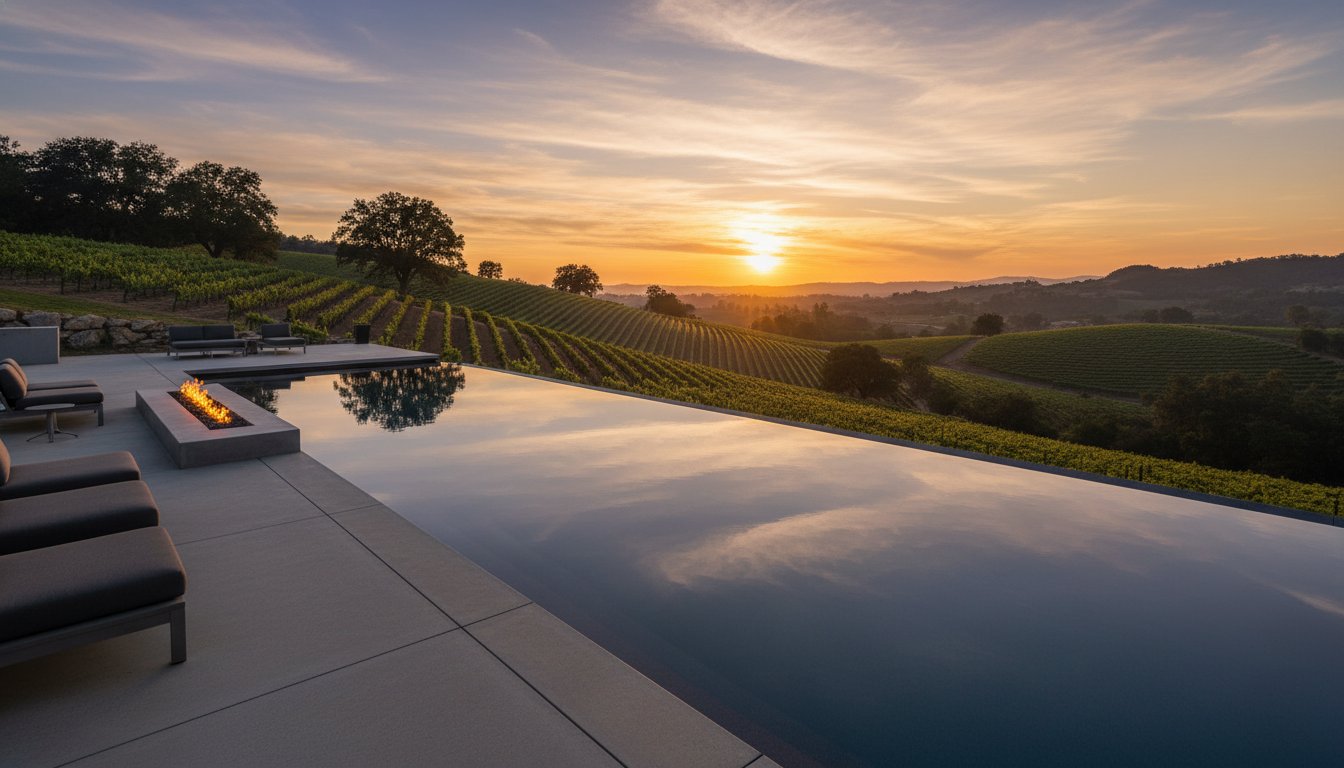
In the steep, rolling terrain of wine country, the most critical element of your luxury oasis isn't the water; it's the invisible engineering buried beneath it. While a vanishing edge spilling over a private vineyard is the ultimate dream, successful hillside pool construction in Napa valley requires a foundation that can withstand seismic shifts and the unique soil conditions of our region. You might worry that a steep slope is a structural liability or that the strict 2025 California Building Codes will stall your vision before the first shovel hits the ground.
It's natural to feel overwhelmed by the technical demands of Napa County permitting or the necessity of mandatory geotechnical reports for sloped lots. We understand that you're looking for more than just a place to swim; you want a permanent landmark that enhances your estate's value and safety. This guide will help you master the complexities of building on challenging terrain by detailing the latest engineering standards and design trends for 2026. We'll walk you through everything from navigating the 30% slope regulations to selecting the perfect dark interior finish that mirrors the sophisticated aesthetic of the valley.
Key Takeaways
- Learn why specialized engineering and geotechnical reports are the non-negotiable first steps for any hillside pool construction napa valley project to ensure long-term stability.
- Discover how vanishing edge designs and multi-level terracing transform steep slopes into sophisticated functional spaces that prioritize your estate's vineyard views.
- Understand the complex Napa County permitting process and the specific logistical requirements for managing site access on challenging terrain.
- Gain insights into the professional roadmap from initial site survey to final inspection, ensuring a methodical and transparent construction experience.
- Identify the value of partnering with an expert who possesses deep institutional knowledge of local seismic conditions and expansive soil behavior.
The Engineering Reality of Hillside Pool Construction in Napa Valley
Hillside pool construction in napa valley is a specialized discipline where the pool behaves more like a bridge than a typical basin. It involves complex structural engineering to anchor heavy concrete vessels into sloped terrain. While a flat-lot pool relies on the surrounding earth for support, a hillside build must often stand independently on reinforced piers. Napa's famous "view lots" require far more than standard shotcrete applications; they demand a calculated marriage of geology and architecture to ensure the structure remains stable for decades.
Homeowners should prepare for a psychological shift when planning these projects. You aren't just digging a hole; you're creating a permanent structural extension of the hillside. Applying sound Construction engineering principles ensures the vessel remains stationary despite the natural pull of gravity. Beyond the panoramic optimization, these structures offer significant functional benefits. They provide essential drainage control and slope stabilization, protecting both the pool and the estate's primary residence from soil creep or erosion. A well-designed pool acts as a massive retaining anchor that can actually improve the overall integrity of the build site.
The Aesthetic vs. Structural Balance
The degree of the slope dictates every aspect of the pool's shape and orientation. On steep inclines, a vanishing edge is the gold standard, but it requires a "back side" that is essentially a massive vertical wall. This zone is the most critical engineering area. It often hides a network of structural piers or caissons drilled deep into the bedrock. The challenge lies in balancing the visual lightness of an infinity edge with the heavy-duty reality of the foundation. We focus on ensuring the structural elements remain invisible, allowing the water to appear as if it's floating above the vineyards.
Why 2026 Technology is Changing Hillside Possibilities
Modern tools make previously "unbuildable" lots viable. In 2026, we use advanced 3D terrain modeling and geotechnical simulations to predict soil behavior with high precision before excavation begins. This allows for more efficient material use and better placement of structural supports. Consider these recent advancements:
- Advanced Shotcrete Additives: Modern mixtures now include specialized fibers that improve bond strength, which is vital for pools located in California's active seismic zones.
- Integrated Geotechnical Sensors: Real-time monitoring during the excavation phase helps engineers adjust the foundation design based on the actual rock density encountered.
- Sustainable Drainage Systems: New filtration and runoff designs integrate seamlessly with the pool structure. These systems protect the integrity of the hillside and prevent water from damaging sensitive vineyards located downslope.
These innovations don't just make the pool safer; they streamline the construction process. By utilizing high-resolution site data, builders can navigate the strict 2025 California Codes with greater confidence, ensuring that every structural detail meets or exceeds the latest safety requirements for hillside pool construction in napa valley.
Navigating Napa’s Topography: Soil, Seismic, and Structural Engineering
The geography of Napa Valley is as complex as the viticulture it supports. While the rolling hills provide breathtaking vistas, they also present significant geological hurdles that require meticulous planning. Successful hillside pool construction in napa valley begins with a comprehensive geotechnical report. This study isn't just a formality; it's the blueprint for your pool's survival. It identifies the exact composition of the earth beneath your site, determining how deep your foundation must go to reach stable material. Without this data, a pool built on a slope is at risk of "creep," where the structure slowly migrates downhill over several years.
Seismic activity is a constant reality in Northern California. In a hillside environment, the pool must be engineered to withstand lateral forces that flat-ground pools never encounter. We design structures that either move in harmony with the earth or remain stubbornly anchored to the bedrock. Managing hydrostatic pressure is equally vital. On a vertical plane, water weight doesn't just push down; it pushes out against the "downhill" wall of the pool. Adhering to Napa's Hillside Development Guidelines ensures that grading and site placement minimize environmental impact while maximizing structural safety. If you're ready to explore how these technical requirements fit your vision, our team specializes in custom pool design and construction tailored to these exact conditions.
Expansive Clay and Bedrock Foundations
Napa is notorious for its "Napa Blue Clay," a highly expansive soil that swells when wet and shrinks when dry. This movement exerts immense pressure on a pool shell, often leading to structural failure in standard designs. To combat this, we shift from soil-supported shells to pier-supported structures. When bedrock is close to the surface, we can anchor the pool directly into the stone. If the bedrock is deep, the engineering must account for the soil's seasonal fluctuations to prevent the pool from lifting or cracking.
The Role of Caissons and Structural Piers
When the slope exceeds a certain gradient, "friction piers" become necessary to prevent the pool from sliding. These piers use the surface area of the column against the deep soil to create stability. We often combine these with tie-backs and grade beams, which act as a rigid skeleton for the pool. Caissons are deep-foundation support columns used to anchor pools to stable strata. By utilizing these heavy-duty supports, hillside pool construction in napa valley achieves the permanence required for a luxury estate. This methodical approach ensures that your vanishing edge remains perfectly level, even as the surrounding landscape evolves over the decades.
Design Frameworks for Slopes: Vanishing Edges and Multi-Level Terracing
Once the structural foundation is secured, the focus shifts to the architectural silhouette that will define your estate. Hillside pool construction in napa valley offers a unique opportunity to utilize the natural grade for dramatic visual effects. While many homeowners request an "infinity pool," it is vital to distinguish between a vanishing edge and a perimeter overflow design. A vanishing edge involves lowering one or more walls so water spills into a visible catch basin, creating a seamless connection with the horizon. In contrast, a perimeter overflow allows water to spill over all four sides into a hidden slot, which requires extreme structural precision on a slope to maintain a perfectly level water line across the entire vessel.
Integrating these features requires a deep understanding of the local landscape. We favor materials that echo the Napa Valley aesthetic, such as natural stone, oversized porcelain tiles, and darker interior finishes like graphite or deep blue. These darker tones don't just provide a modern, lagoon-like appearance; they also absorb solar heat and create a mirror-like surface that reflects the surrounding vineyards. By terracing the land, we transform "unusable" steep terrain into distinct functional zones. This methodical approach ensures that the pool doesn't just sit on the hillside but feels like an organic extension of the topography.
The Infinity Edge: Engineering the Perfect View
The magic of a vanishing edge relies on a hidden network of catch basins and surge tanks. On a hillside, the catch basin must be engineered to handle both the hydraulic flow of the pumps and the occasional high-wind event common in the valley. We use precise horizon alignment to ensure the water line disappears exactly where the vineyard begins. It's important to consider that these troughs require regular maintenance, as they can collect leaves or debris. Our team often integrates pool automation systems to manage the flow rates and cleaning cycles of these complex edge details automatically.
Terraced Decking and Outdoor Living Zones
Effective hillside design uses retaining walls for more than just soil retention; they become the backbone of your outdoor living space. By creating multiple levels, we can incorporate sun shelves, lounge areas, and fire pits that offer different perspectives of the property. Seamless transitions are achieved through wide, shallow staircases or stone pathways that connect the main residence to the lower pool deck. This layered approach allows for a natural flow between an outdoor kitchen on the upper terrace and a secluded spa area nestled into the slope below. Each level serves a specific purpose, ensuring that every square foot of your hillside pool construction in napa valley project provides maximum utility and aesthetic value.

The Roadmap to Construction: Permitting, Site Access, and Logistics
Transforming a steep vineyard lot into a functional oasis requires a precise chronological sequence. The process for hillside pool construction in napa valley follows a five-step progression: initial site survey and geotechnical assessment, structural engineering and 3D modeling, permit acquisition, foundation and shell construction, and final finishing. Each phase is interconnected. This ensures that the vision you see on paper translates perfectly to the terrain. Because of the technical nature of these builds, homeowners should expect a longer timeline than a standard project. The journey often spans several months from the first soil sample to the final inspection.
Managing the Napa County Planning Department is often the most complex part of the journey. Since January 1, 2026, all permit applications must strictly comply with the 2025 California Codes. Applicants should allow approximately 21 business days for the initial review of building plans. If your slope exceeds 30%, you'll need a special Use Permit Exception to the Conservation Regulations. This triggers a more detailed discretionary review. Our team manages these intricate details, ensuring your project meets every local requirement. If you're ready to begin this journey, we offer comprehensive custom pool design and construction services that handle everything from blueprints to the final permit sign-off.
Navigating Local Regulations and Environmental Impact
Environmental stewardship is a priority in the valley. We must carefully observe setbacks from active vineyards and natural watercourses to protect the local ecosystem. During excavation, a Stormwater Pollution Prevention Plan (SWPPP) is essential for erosion control. This prevents soil runoff from entering sensitive areas. Napa County requires specific seismic calculations for any structure on a slope exceeding 15%. These regulations ensure that your pool remains a stable asset even during seismic events or heavy winter rains.
Logistics: Moving Mountains in Tight Spaces
The narrow, winding roads leading to Napa's best view lots present a significant logistical hurdle. Standard dump trucks and excavators often can't reach the site without a strategic staging plan. We frequently employ crane operations. We lift equipment and materials over existing structures or vineyard rows to minimize landscape impact. To reach remote hillside locations where heavy trucks cannot tread, we use a specialized shotcrete pump strategy. This allows us to transport the concrete mix through hundreds of feet of hose. This ensures the pool shell is formed with precision regardless of site accessibility. This level of logistical oversight is what separates a standard builder from a hillside specialist.
Partnering with a Specialist: Why Experience Matters for Hillside Projects
Building on a slope isn't a task for the average contractor. Most general pool builders shy away from complex inclines because the stakes are incredibly high. A minor miscalculation in soil pressure or a poorly anchored pier can lead to structural failure. Choosing a specialist for hillside pool construction in napa valley means choosing a team that understands the intersection of high-end aesthetics and rigorous engineering. This isn't just about digging a basin; it's about managing a multi-faceted construction project where the foundation is the most critical asset you'll ever own.
Institutional knowledge is the most valuable tool we bring to the job site. With over 45 years of experience in Northern California, Paradise Pools, Inc. has developed a methodical approach to the unique seismic and soil challenges of the region. We don't just build the pool and walk away. Our commitment extends to the long-term preservation of your investment. From precision equipment installation to weekly pool maintenance, we ensure that the complex hydraulic systems required for vanishing edges remain in peak condition for decades. We act as a stabilizing force, simplifying intricate tasks and offering a sense of permanent, reliable support.
The Paradise Pools, Inc. Difference in Napa and Sonoma
Our history is defined by projects that others deemed impossible. We've successfully anchored luxury vessels into nearly vertical slopes and created seamless water lines on shifting clay soils. This success stems from a collaborative workflow where our in-house design team works in lockstep with geotechnical engineers. We prioritize longevity over shortcuts. Our process includes meticulous planning for pool equipment repair and replacement strategies that anticipate the needs of a hillside system. By considering site access and structural integrity from the very first sketch, we eliminate the uncertainty that often plagues complex builds.
Realizing Your Vineyard Oasis
Ultimately, the technical rigors of hillside pool construction in napa valley serve a single purpose: the realization of a specific quality of life. Once the caissons are set and the shotcrete is cured, the engineering fades into the background. What remains is a stunning vineyard oasis that offers a sense of permanent, reliable support. You gain the peace of mind that comes from knowing your vanishing edge is anchored to the bedrock of the valley. It's time to transition from the conceptual stage to a tangible, well-maintained outcome. Schedule your Napa Valley hillside site evaluation with Paradise Pools, Inc. to begin the journey toward your custom estate pool.
Secure Your Estate's Legacy with Expert Engineering
Building a luxury retreat on a sloped lot is a significant undertaking that requires a methodical approach to geotechnical stability and architectural design. You've learned that successful hillside pool construction in napa valley depends on a deep understanding of expansive soils, seismic requirements, and the intricate permitting process unique to our region. From the initial soil report to the final vanishing edge finish, every detail must be handled with precision to ensure your investment remains a permanent, stable landmark of your property.
Paradise Pools, Inc. has been family-owned and operated since 1978. We bring nearly five decades of specialized experience in Napa and Sonoma terrain to every project we lead. Our team provides a comprehensive partnership that encompasses custom design, structural engineering, and long-term weekly maintenance. We act as your trusted guide through the complexities of modern construction, ensuring a seamless transition from a technical challenge to a refined lifestyle asset. It's time to transform your conceptual vision into a tangible reality.
Start Your Custom Hillside Pool Consultation
We look forward to helping you realize the full potential of your property's unique topography and breathtaking vistas.
Frequently Asked Questions
Can you build a pool on a very steep slope in Napa?
Yes, building on a steep grade is achievable through specialized structural engineering and deep foundation techniques. For slopes exceeding 30%, Napa County requires a special Use Permit Exception to Conservation Regulations. This process involves a discretionary review to ensure the project maintains the integrity of the landscape while providing a stable, permanent platform for your luxury vessel.
How much extra does hillside pool construction cost compared to a flat lot?
Hillside projects require a larger investment than flat-lot builds because of the extensive geotechnical work and logistical complexity involved. You'll need to account for structural piers, specialized drainage systems, and the increased labor hours required for excavation on a grade. While we don't provide fixed pricing, homeowners should anticipate that engineering and site access will be the primary drivers of the project budget.
How long does the permitting process take for a hillside pool in Napa County?
The initial plan review in the City of Napa typically takes approximately 21 business days. All applications submitted after January 1, 2026, must adhere to the 2025 California Codes. Complex hillside pool construction in napa valley may require additional time for geotechnical report reviews and Fire Marshal inspections, as these specialized assessments are mandatory for every sloped terrain project.
What is the best type of pool foundation for expansive Napa soil?
A deep foundation using reinforced concrete caissons or structural piers is the most reliable choice for the region's expansive clay soils. These supports anchor the pool shell into stable strata or bedrock, preventing the structure from shifting during seasonal moisture changes. This method protects the vessel from the shrink-swell cycle of Napa Blue Clay, which can otherwise cause structural cracking in standard pool shells.
Do I need a separate retaining wall for my hillside pool?
Many hillside designs utilize the pool's downhill wall as a structural retaining element, but separate walls are often necessary to create level decking areas. In California, any retaining wall taller than 4 feet requires a separate permit and engineered plans. Integrating these walls into the overall design helps manage soil pressure and provides the flat surfaces needed for sun shelves and outdoor living zones.
How do you get heavy construction equipment onto a steep vineyard property?
We use a combination of strategic staging, crane operations, and specialized machinery to navigate narrow vineyard roads and steep grades. If a standard concrete truck cannot reach the site, we utilize high-pressure shotcrete pumps to transport material through long hose runs. This methodical approach ensures that heavy equipment delivery doesn't damage your existing landscape or sensitive vineyard rows during the build.
Is an infinity edge pool more difficult to maintain on a slope?
Infinity edge pools require more technical oversight than standard designs because of the catch basin and surge tank filtration systems. Troughs must be kept clear of debris, and the water chemistry requires frequent monitoring due to increased evaporation rates. Investing in professional weekly pool maintenance ensures that the complex hydraulic systems and auto-leveling features function correctly, especially in the high-wind areas common on Napa hillsides.
What happens if there is an earthquake and my pool is on a hillside?
Modern hillside pool construction in napa valley includes specific seismic calculations to ensure the structure remains secure during an earthquake. For any structure on a slope exceeding 15%, Napa County requires engineering that accounts for lateral earth movement. By anchoring the pool to bedrock with caissons, the vessel is designed to stay stationary even if the surface soil experiences minor shifts during a seismic event.


