
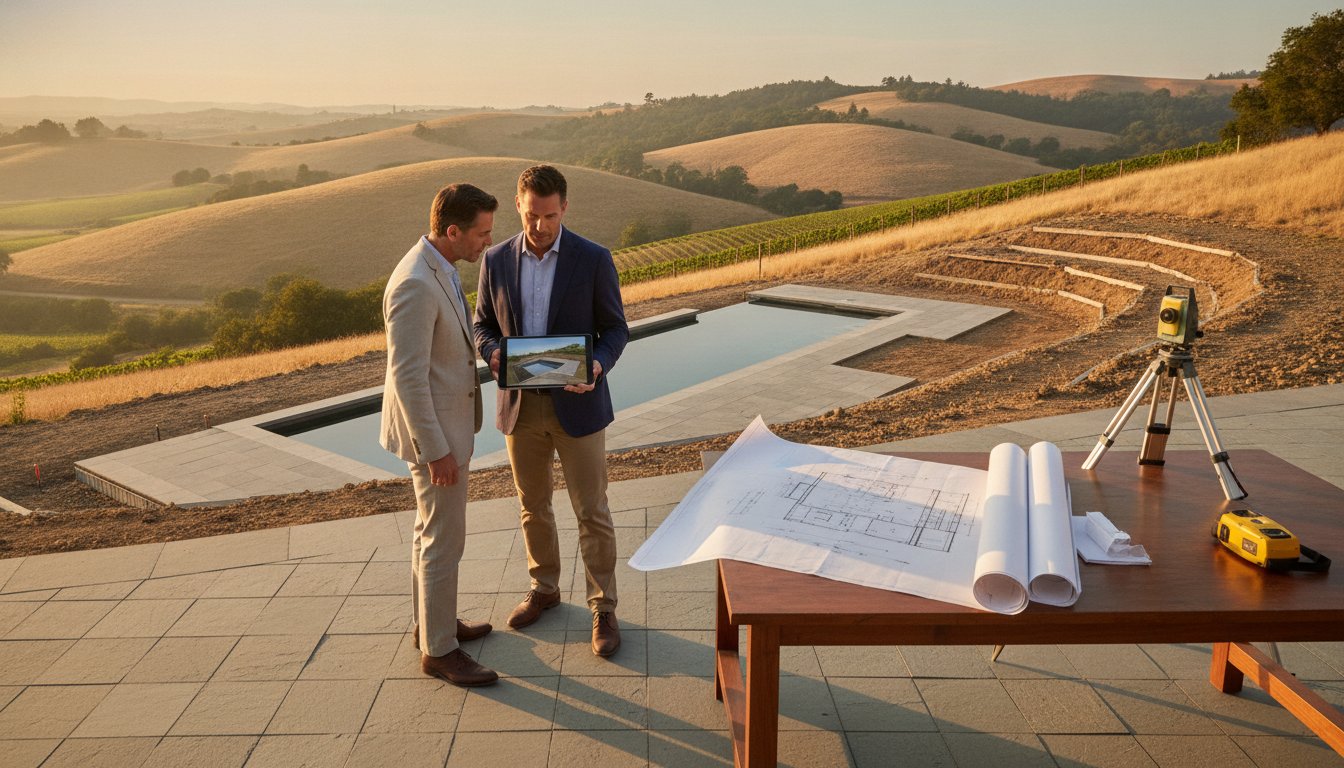
A luxury pool is essentially a complex engineering project disguised as an aesthetic masterpiece. In the unique terrain of Napa and Sonoma, the ground beneath your feet can be your greatest risk if not properly managed. Many homeowners start with a vision of architectural harmony but soon find themselves overwhelmed by the technical realities of hillside stability and shifting soils. Understanding the common pool construction mistakes to avoid is the first step in protecting your investment and ensuring your backyard retreat stands the test of time.
It's understandable to feel a sense of unease regarding permit delays or the potential for structural failure on a slope. You want a process that feels like a partnership, where every detail is handled with precision and care. We promise to guide you through the essential engineering and design choices that prevent costly pitfalls while maintaining the elegance of your estate. This checklist provides a clear overview of local geological requirements, the latest 2026 Title 24 energy standards, and the methodical steps necessary to transition from a conceptual design to a perfectly executed reality.
Key Takeaways
- Understand why North Bay geological expertise is the foundation for preventing structural issues like deck cracking and tile displacement in expansive soils.
- Identify common pool construction mistakes to avoid regarding California's 2026 Title 24 energy codes and the selection of high-efficiency equipment.
- Learn to harmonize your pool’s scale and orientation with your estate’s architecture and the natural path of the sun.
- Navigate the legal landscape of local permits and safety barriers to protect your property’s value and simplify future real estate transactions.
- Establish a rigorous vetting process for builders that prioritizes institutional knowledge of hillside engineering and direct project oversight.
Geological and Engineering Errors: The Foundation of Failure
The soil in the North Bay is rarely a neutral participant in your backyard project. In Napa and Sonoma, expansive clay is the primary structural adversary. Expansive soil is a type of clay that undergoes significant volume changes, swelling when wet and shrinking when dry, which exerts immense physical pressure on a pool's concrete shell. When a builder utilizes a generic structural plan without accounting for these shifts, it's a recipe for deck cracking and tile popping. You might see hairline fractures in the decking within the first year as the shell moves independently of its surroundings.
One of the most critical pool construction mistakes to avoid is falling into the "Hillside Trap." Standard gravity-fed drainage systems often prove insufficient for the steep gradients found in our local terrain. Without a custom-engineered drainage solution, runoff can saturate the soil behind the pool wall, creating a massive buildup of pressure that threatens the entire structure. Proper swimming pool design and construction requires a deep understanding of how water moves across a specific lot, especially during the heavy winter rains common to Northern California.
The Danger of Skipping Specialized Soil Reports
A geotechnical engineer is a non-negotiable partner for any hillside build in Santa Rosa or Napa. These specialists analyze the specific composition of your lot to determine exactly how much steel reinforcement and what shotcrete thickness your pool requires. Skipping this step often leads to hydrostatic pressure issues. This occurs when groundwater levels rise, creating enough upward force to literally lift a pool shell out of the ground. Investing in a comprehensive soil report ensures your pool remains a permanent fixture of your estate rather than a shifting liability.
Hydraulic Engineering vs. Standard Plumbing
Precision in the mechanical room is just as vital as the steel in the ground. Mistakes in pipe sizing are common when builders rely on standard plumbing templates rather than site-specific hydraulic engineering. If pipes are undersized, the pump must work harder, leading to "dead spots" where water remains stagnant and algae thrives. The location of your equipment pad also requires careful consideration. Placing it too far from the pool or in a confined space can increase noise levels and decrease the lifespan of your filtration system. Integrating modern pool automation systems requires a seamless marriage of software and hydraulics to ensure your water remains pristine with minimal effort.
Mechanical and Efficiency Pitfalls: Avoiding the "Money Pit" Syndrome
The mechanical room is the heart of your investment, yet it's often where homeowners attempt to cut corners. One of the most frequent pool construction mistakes to avoid is prioritizing lower upfront equipment costs over long-term operational efficiency. Choosing a standard single-speed pump instead of a variable-speed model is a decision that often leads to significantly higher utility bills. Modern variable-speed pumps allow for precise flow control, which is essential for maintaining water clarity without unnecessary energy waste. We often see the consequences of these choices through our maintenance services, where undersized filters force owners to spend double on chemicals to compensate for poor water circulation.
Energy efficiency isn't just a preference in California; it's a regulatory requirement. As of January 1, 2026, California Title 24 Part 6 mandates that new pool projects use electric heat pumps or solar thermal systems as the primary heating source. Gas heaters are now relegated to a secondary, supplemental role. Failing to plan for these high-efficiency systems during the initial design phase can lead to expensive retrofitting later. While mechanical efficiency is vital, it must work in tandem with physical safety. Even the most advanced automation systems should be designed to support the CPSC safety barrier guidelines, ensuring that your equipment and your environment remain secure.
Automation Oversights and Smart Tech Errors
Building a pool in 2026 without a robust automation backbone is a significant resale mistake. Homeowners often overlook Wi-Fi signal strength at the equipment pad, leading to frustrating connectivity issues with mobile controllers. A truly luxury experience requires integrating lighting, heating, and filtration into a single, user-friendly interface. If you're planning a new build, our team can help you select custom pool equipment that balances sophisticated automation with reliable performance.
Sanitation System Mismatches
Sanitation is not a one-size-fits-all decision. During high-heat Sonoma summers, undersized salt cells fail to produce enough chlorine to keep up with evaporation and bather load. This leads to algae blooms that are difficult to eradicate. For high-use family pools, ignoring secondary sanitation like UV or Ozone systems is a common error that results in higher chemical dependency. Finally, the first 30 days of a pool's life are critical. Poor chemical balancing during this window can permanently ruin a new plaster finish, leading to scaling or staining that requires early resurfacing.
Aesthetic and Lifestyle Mismatches: Design Errors That Diminish Value
A luxury pool should feel like an organic extension of your home's architecture, yet aesthetic misalignment remains a frequent hurdle for many homeowners. One of the most significant pool construction mistakes to avoid is the "Scale Mistake," where the water feature either dwarfs the backyard or feels lost against a sprawling estate. Achieving the right balance requires a deep understanding of your property's proportions. Whether your home reflects a classic Mediterranean style or a sleek, modern vineyard aesthetic, the pool must complement those lines rather than compete with them. The pool’s visual anchor should be positioned so that the water’s surface is the primary focal point from the home’s main living area, creating a seamless transition between indoor and outdoor spaces.
Functionality is just as vital as appearance. A common design error involves ignoring the sun’s natural path across your lot. Placing a tanning ledge or Baja shelf in an area that falls into the house's shadow by mid-afternoon significantly reduces its utility during peak relaxation hours. Similarly, the choice of finishes must harmonize with your home’s exterior palette. While standard plaster is a traditional choice, it often lacks the depth of color required to match the rich tones of Sonoma stone or Napa wood siding. Adhering to Pool & Hot Tub Alliance standards during the design phase ensures that these aesthetic choices are supported by sound engineering and long-term durability.
Material Selection and Longevity
The North Bay’s unique climate, characterized by intense summer heat and crisp winter nights, puts immense stress on pool materials. Cheap coping materials often fail under these freeze-thaw-heat cycles, leading to unsightly cracks or loose stones. While trendy, vibrant tiles might seem appealing today, they often date a property within five years, potentially affecting resale value. When comparing Pebble Tec vs. Plaster, the initial investment in a pebble finish is often more economical over a 15-year span. Plaster typically requires resurfacing every 7 to 10 years, whereas higher-end aggregate finishes offer a lifespan that frequently doubles that timeframe.
Landscape and Hardscape Integration
A pool doesn't exist in a vacuum; it's part of a larger ecosystem. Building without a comprehensive drainage plan for the entire yard is a critical error that can lead to soil erosion or water pooling near the foundation. Homeowners also frequently plant "dirty" trees like oaks or redwoods too close to the water line. These species drop significant debris, overwhelming filtration systems and staining finishes. Finally, avoid creating "islands" of concrete that don't connect naturally to your indoor-outdoor living spaces. A well-designed hardscape should guide guests through the environment, creating a logical flow from the kitchen to the lounge area and finally to the water’s edge.

The Legal and Safety Minefield: California Building Codes and Permits
The regulatory landscape in Northern California is as complex as the geology. Building without a permit in Napa County is a calculated risk that rarely pays off. The "Permit Shortcut" myth suggests you can save time and money by bypassing local authorities, but the reality is often a financial catastrophe involving heavy fines and the potential requirement to demolish completed work. These legal oversights frequently surface during real estate transactions, where non-compliant pool barriers or fencing can halt a sale entirely. Understanding these nuances is vital to identifying the pool construction mistakes to avoid during the planning phase.
Compliance also extends to energy use and long-term documentation. The California Title 24 Part 6 update, effective January 1, 2026, mandates that outdoor pools using heat pumps or gas heaters must include a pool cover. Beyond the equipment itself, failing to document "as-built" plans, the final blueprint of where pipes and wires actually sit, makes future equipment repair or landscaping nearly impossible without invasive digging. These records are your property’s technical history, and their absence can significantly complicate future permit applications for home additions or remodels.
Navigating Local HOA and City Regulations
Managing the nuances of permit offices in Danville, Walnut Creek, or San Rafael requires a steady hand and local knowledge. Setback requirements, which dictate how far a pool must be from property lines or existing structures, are the most frequent cause of project delays. Additionally, noise ordinances in these communities often restrict where you can place an equipment pad. If your pump is too close to a neighbor’s bedroom window, you may be forced to relocate it at your own expense after construction is finished. A builder with local geological and legal knowledge will account for these setbacks during the initial design phase.
Mandatory Safety Features for 2026
Modern safety standards require features like dual main drains and atmospheric vacuum release systems, which are non-negotiable life-savers. Automatic pool covers have become the gold standard in the North Bay, providing both a physical safety barrier and essential thermal retention to meet energy codes. If you are considering a property with an existing installation, don't rely on a general home inspector who may lack industry-specific expertise. We provide specialized pool inspections for real estate to ensure every component meets current safety and legal benchmarks before you sign the contract.
Securing Your Investment: The Ultimate Builder Vetting Checklist
Selecting the right partner is the final and most critical step in ensuring your project remains a source of pride rather than a liability. One of the most common pool construction mistakes to avoid is falling into the "Subcontractor Trap." Some firms operate primarily as project brokers, outsourcing every phase of construction to different crews with minimal on-site oversight. This lack of direct control often leads to the structural and mechanical errors discussed in previous sections. A builder who maintains a consistent presence on your property ensures that the engineering specifications for your hillside foundation are followed to the letter.
Financial transparency is another hallmark of a professional partnership. You should never sign a contract that lacks a clear, milestone-based payment schedule. These payments should align with verified stages of completion, such as the successful placement of steel reinforcement or the application of shotcrete. This structure protects your capital and keeps the project moving at a steady, predictable rhythm. Additionally, look for a builder who sees the project through the lens of long-term preservation. Firms that offer weekly pool maintenance and equipment repair are inherently more accountable because they must live with the long-term results of their own workmanship.
Questions to Ask Before You Break Ground
Before committing to a contract, conduct a thorough interview to gauge a builder’s technical depth. Consider asking these specific questions:
- "How many hillside pools have you engineered in the last 5 years?"
- "What is your specific protocol for expansive soil mitigation on this particular lot?"
- "Do you provide a comprehensive 'pool school' and post-construction support to help me manage the automation systems?"
The Paradise Pools, Inc. Difference
At Paradise Pools, Inc., we leverage over 45 years of institutional knowledge to guide homeowners through the complexities of North Bay construction. Being family-owned since 1978, we have seen how different materials and engineering techniques perform over decades in the Napa and Sonoma climates. Our "Design for Maintenance" philosophy means we don't just build for the first day of use; we build for the 20th year of ownership. We ensure that every equipment pad is organized for easy repair and every hydraulic system is optimized for efficiency. If you are ready to begin your journey with a partner who understands the unique requirements of your estate, Schedule a consultation with our expert design team today.
Realizing Your Vision with Engineering Precision
A luxury pool is a permanent addition to your estate that requires technical mastery and a deep respect for the local landscape. By prioritizing geological stability and adhering to the 2026 Title 24 energy standards, you ensure your investment remains a source of relaxation rather than a series of ongoing repairs. Navigating these complexities is far simpler when you have a partner who understands the specific demands of the North Bay terrain. Our family-owned firm has been operating in Napa since 1978, bringing over 45 years of local engineering expertise to every project we undertake.
We don't just build pools; we preserve them through our comprehensive maintenance and repair ecosystem. This long-term perspective ensures that every design choice supports a lifetime of effortless ownership. To help you navigate this process with confidence and identify the critical pool construction mistakes to avoid, we've compiled our institutional knowledge into a practical resource for homeowners. Download our 50-Point Pool Construction Checklist to start your project on a foundation of stability and excellence. We look forward to helping you create a backyard retreat that complements your lifestyle for decades to come.
Frequently Asked Questions
What is the most expensive pool construction mistake to fix?
Structural failure resulting from poor engineering or ignored soil conditions is the most costly error to remediate. If a pool shell cracks or shifts due to hydrostatic pressure, the fix often requires total demolition and a complete rebuild. This is the ultimate example of pool construction mistakes to avoid, as the repair costs frequently exceed the original project budget and disrupt the entire landscape.
Do I really need a soil report before building a pool in Napa Valley?
Yes, a geotechnical soil report is essential due to the prevalence of expansive clay in Napa Valley. These soils swell and shrink with moisture changes, exerting massive pressure on the pool shell. Without a professional report, engineers cannot determine the necessary steel reinforcement or shotcrete thickness. Skipping this step leads to inevitable structural cracking or deck displacement as the ground shifts over time.
Can I build a pool on a sloped backyard in Sonoma County?
You can certainly build on a slope, provided the project utilizes specialized hillside engineering. Sonoma's terrain often requires piers, grade beams, or retaining walls to ensure long-term stability. Successful builds on these gradients depend on a builder's ability to manage soil stability and water runoff effectively, ensuring the pool remains firmly anchored to the hillside regardless of the steepness.
How does poor drainage affect my pool’s structural integrity?
Inadequate drainage allows water to collect behind the pool walls, creating hydrostatic pressure that can buckle the concrete shell. In Northern California, managing heavy winter runoff is a critical safety requirement. If water isn't directed away from the structure, it saturates the soil and leads to erosion, which eventually compromises the pool's foundation and can even cause the shell to lift.
What are the California 2026 safety requirements for new pools?
Effective January 1, 2026, California law requires a safety barrier for any new residential pool, such as a fence, safety cover, or alarms. Additionally, Title 24 energy codes mandate a pool cover for any outdoor pool using a heat pump or gas heater. Standard safety features also include dual main drains and vacuum release systems to prevent suction entrapment, ensuring a secure environment.
Why is pool automation considered a necessity rather than a luxury now?
Automation is vital for managing the sophisticated, energy-efficient equipment required by modern building codes. Smart controllers optimize the run times of variable-speed pumps and heat pumps, significantly reducing utility costs. It also simplifies the daily ownership experience by integrating lighting, sanitation, and heating into a single interface, which helps prevent the mechanical errors that lead to expensive equipment repairs.
How do I know if a pool builder is qualified for complex terrain?
A qualified builder should provide a portfolio of completed hillside projects and a specific protocol for expansive soil mitigation. Look for firms with at least several decades of local experience in the North Bay. They should be able to explain the unique engineering required for your lot's specific gradient and soil type rather than relying on a generic, one-size-fits-all structural plan.
Will a poorly designed pool decrease my home’s resale value?
A poorly designed pool often becomes a significant liability during real estate transactions. Mismatched aesthetics, unpermitted work, or visible structural distress like cracked tiles will likely fail a professional pool inspection. Conversely, a well-engineered pool that harmonizes with the estate's architecture is a major asset that increases the desirability and market value of a property in Napa and Sonoma.


