
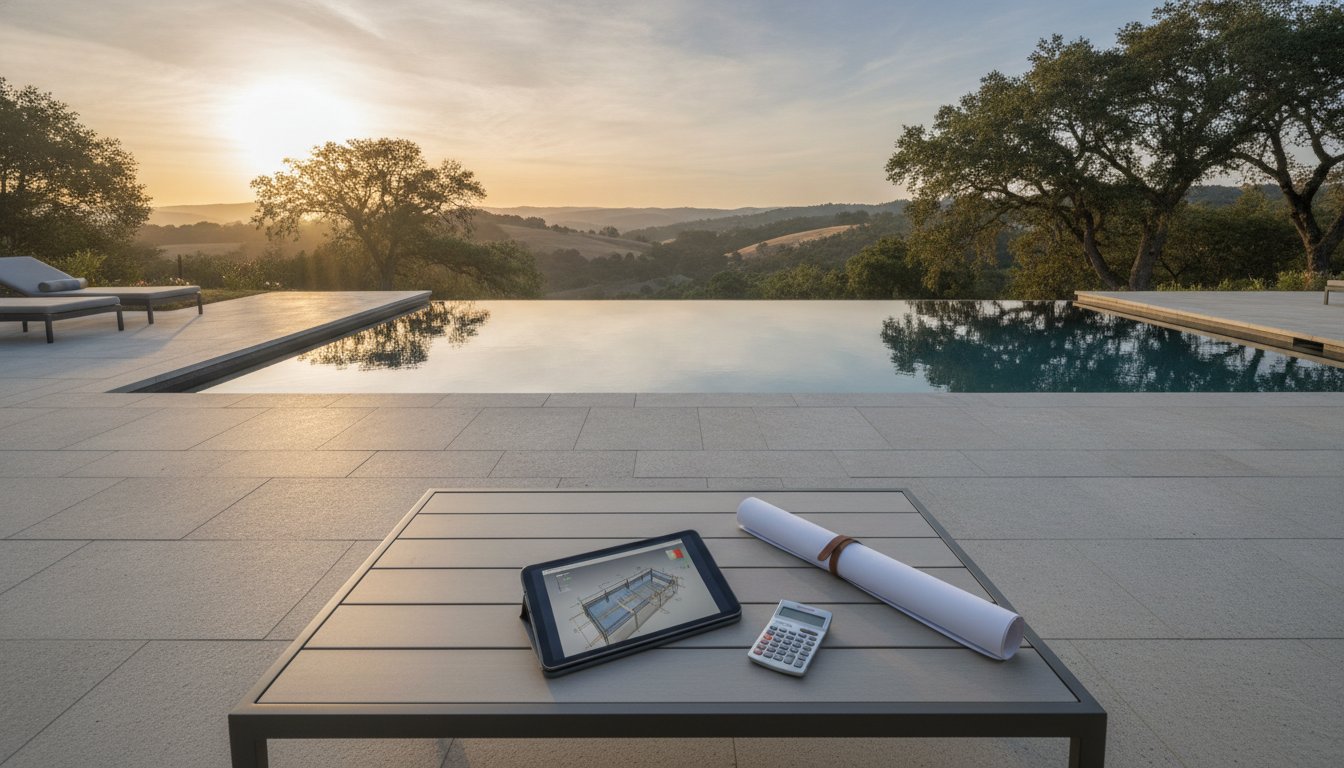
In the Bay Area, labor rates for specialized construction sit 20% to 40% higher than the national average. This reality often turns a simple backyard dream into a complex financial puzzle for homeowners. You likely already realize that local terrain and strict regulations mean a standard online calculator won't suffice. To get a realistic picture, you need a pool construction cost estimator Bay Area homeowners can actually trust to account for our unique geological and legislative environment.
We understand the frustration of hidden fees and the sticker shock that comes with California's evolving building codes. This guide offers a transparent framework for your 2026 project, breaking down the impact of the new Title 24 energy requirements, which can add between $3,000 and $35,000 to a project's bottom line. We'll also examine the specialized engineering required for hillside lots and local permit costs, such as Santa Clara's $1,341.70 inspection fee. With over 45 years of experience building in this region, we're here to ensure your investment is grounded in precision and long-term value.
Key Takeaways
- Understand why Bay Area labor and materials command a premium compared to national averages to set a realistic baseline for your 2026 project.
- Identify the physical constraints of your property, such as machine access and excavation difficulty, which significantly influence the final quote.
- Use a specialized pool construction cost estimator Bay Area residents rely on to account for seismic requirements and complex hillside engineering.
- Learn how to budget for a complete outdoor environment, including hardscaping and lighting, rather than just the pool vessel itself.
- Discover the value of partnering with a builder who possesses decades of institutional knowledge regarding North Bay soil and permitting processes.
Understanding the Baseline: Custom Inground Pool Costs in the Bay Area
The Bay Area presents a construction environment unlike any other in the country. While national averages might suggest a certain price point, our local economy operates on a different scale. High demand for skilled trades and a limited supply of specialized subcontractors mean that a pool construction cost estimator Bay Area residents use must prioritize local labor realities over generic online calculators. In 2026, these costs are further influenced by the California Title 24 Energy Code, which mandates heat pumps or solar thermal systems as primary heating sources, potentially adding $3,000 to $35,000 to a project's total budget.
Defining "custom" is the first step in establishing a baseline. Unlike pre-fabricated options, a custom build involves unique shapes, depths, and high-end finishes that require specialized swimming pool construction methods like gunite. This method remains the standard for our region because it provides the structural integrity needed to handle seismic activity and varied soil conditions. However, the flexibility of gunite also means that every additional curve or bench increases the labor hours and material volume required for the build.
The "Bay Area Premium": Labor and Logistics
Subcontractor rates for excavation and plumbing in Northern California reflect the region's high cost of living. Labor rates here are 20% to 40% higher than the national average, with two-person crews typically billing at $50 to $100 per hour. In Napa and Sonoma, these rates can be even more volatile due to the travel time for specialized crews based in the East Bay or South Bay. Logistical hurdles also play a role; transporting heavy equipment through narrow, winding hillside roads requires meticulous planning and additional time. Most professional custom builds in the North Bay typically begin in the mid-to-high five figures for a basic vessel before accounting for site-specific engineering.
Fixed vs. Variable Costs in Your Estimate
Every project includes fixed elements that form the foundation of your quote. These usually include the initial design phase, basic plumbing, and standard filtration systems. In 2026, these fixed costs also include mandatory permit fees, such as the $1,341.70 inspection fee required in Santa Clara County. Variable costs, however, are what truly shape the final investment. These include:
- Material Inflation: Prices for reinforced steel and high-end tile continue to fluctuate, requiring a 10% to 20% contingency fund.
- Interior Finishes: Moving from a standard plaster to a pebble finish or intricate glass tile adds significant material and labor costs.
- Size and Depth: Larger volumes require more gunite, more steel, and more powerful equipment.
Because of these variables, a generic pool construction cost estimator Bay Area homeowners find online often fails to capture the true scope of a project. A realistic estimate must account for the specific geological and regulatory environment of your backyard.
The 5-Point Cost Estimator Framework
Building a custom pool requires a systematic approach to budgeting that accounts for the specific challenges of Northern California. A reliable pool construction cost estimator Bay Area homeowners rely on starts with five core pillars. First, we evaluate site access. If your backyard isn't "machine-friendly," meaning it lacks a clear path for standard excavation equipment, the project timeline and labor costs will shift. Tight access often necessitates smaller, less efficient machinery or even manual labor, which adds complexity to the initial site preparation phase.
Permitting and Regulatory Fees
In Napa and Sonoma counties, navigating the regulatory environment is as critical as the construction itself. Bay Area permits can range from a few thousand dollars to significant five-figure sums depending on the municipality and the complexity of the site. California's SB442 requires every new or remodeled pool to include at least two of seven specific safety features, such as physical barriers or self-latching gates. Additionally, as of January 1, 2026, the updated Title 24 Energy Code mandates that gas heaters cannot be the primary heating source. Compliance now requires heat pumps or solar thermal systems, which can significantly alter your initial equipment budget. Working with a builder who manages this intricate paperwork during the custom pool design and construction phase is essential for a seamless experience.
Engineering is the second pillar. Before a single shovel hits the dirt, a geotechnical report for pool construction is often required to assess soil stability. This is particularly true in Bay Area microclimates where expansive clay or seismic zones are present. Following this, the shell and plumbing phase utilizes high-strength gunite and hydraulically efficient designs to ensure longevity. These structural elements are the "bones" of your investment, designed to withstand the region's unique environmental pressures.
Equipment Selection: Efficiency vs. Upfront Cost
Smart pools are no longer a luxury; they're a standard expectation for 2026 builds. Automation systems allow you to manage lighting, filtration, and temperature from a smartphone. While the upfront cost of variable speed pumps and heat pumps is higher than older technology, the long-term ROI is undeniable. In high-electricity regions like ours, these systems pay for themselves through reduced monthly utility bills. Efficient heating solutions are especially vital for the cooler microclimates of the North Bay, where maintaining a comfortable water temperature can otherwise become a significant ongoing expense.
The final pillar covers hardscapes and finishes. This includes the coping, decking, and interior surfaces like Pebble Tec. These choices define the aesthetic harmony of your backyard, turning a functional water vessel into a cohesive outdoor retreat. By understanding these five pillars, you can move from a conceptual idea to a precise, manageable budget.
Engineering for the North Bay: Soil, Slopes, and Site Prep
While the aesthetic details of a custom pool capture the imagination, the structural integrity of the vessel is determined by what lies beneath the surface. For any accurate pool construction cost estimator Bay Area homeowners consult, geological variables represent the most significant "hidden" expenses. Our region is notorious for expansive clay soil, which swells when wet and shrinks when dry. This constant movement exerts immense pressure on a pool shell. To counteract this, we utilize advanced seismic engineering and reinforced steel schedules that exceed standard building codes, ensuring the structure remains stable through decades of seasonal shifts.
A geotechnical report is the first essential step in this process. This soil test identifies the specific composition of your lot, revealing whether we'll encounter bedrock, high groundwater, or unstable fill. Skipping this step is a risk no professional builder should take. If the report identifies a high water table, for instance, we must install hydrostatic valves and specialized drainage systems to prevent the pool shell from literally lifting out of the ground. These engineering requirements are the foundation of a reliable estimate.
Building on a Slope in Sonoma and Napa
The rolling hills of Sonoma and Napa offer breathtaking views, but they also transform a standard pool project into a major civil engineering feat. When building on a slope, a project often requires massive retaining walls to create a level building pad. Engineering solutions for "vanishing edge" or infinity pools on these hillsides involve complex structural piers and reinforced footings that anchor the pool into stable soil or rock. Hillside pools require specialized engineering to counteract gravitational pressure and potential soil creep that flat-land builds simply don't face. These structural requirements can often double the shell's cost compared to a level lot.
Geological Factors and Foundation Integrity
The North Bay's diverse landscape means "surprises" are common once excavation begins. Encountering solid rock can necessitate specialized rock hammering equipment, which adds both time and expense to the site prep phase. Similarly, discovering undocumented underground utilities or old septic systems requires immediate, expert remediation. Paradise Pools prioritizes over-engineered foundations because we build for 45+ year longevity. We understand that a pool is a permanent addition to your estate; it must be designed to withstand the unique seismic and hydrostatic pressures of the Bay Area. This commitment to structural excellence is why we suggest a 10% to 20% contingency fund for every project to cover these site-specific variables comfortably.

Finishing the Oasis: Landscaping, Lighting, and Luxury Features
The water vessel itself is merely the centerpiece of a much larger architectural composition. When using a pool construction cost estimator Bay Area homeowners must look beyond the gunite shell to the "Master Plan." A truly cohesive backyard integrates the pool with expansive patios, outdoor kitchens, and professional landscaping. In the San Jose area, full backyard renovations often range from $25,000 to over $75,000, reflecting the 20% to 40% premium on local labor. Neglecting these surrounding elements in your initial budget often leads to a finished pool that feels disconnected from the rest of your estate.
Interior Finishes and Aesthetic Upgrades
Interior finishes define both the longevity and the visual character of the water. While traditional plaster remains an entry-level option, 2026 trends show a decisive shift toward pebble and stone finishes for their superior durability and natural aesthetic. These premium surfaces resist chemical erosion better than plaster, extending the time between resurfacing needs. For those seeking a high-end shimmer, glass tile mosaics offer a level of refinement that standard materials cannot match. We also integrate programmable LED lighting systems, which allow you to shift the ambiance of the entire space while remaining compliant with California's strict energy codes. If you're interested in enhancing your current setup, we offer expert pool lighting installation to transform your evening landscape.
Automatic Covers and Safety Requirements
Safety is a non-negotiable component of any California build. Under SB442, every new pool must include at least two drowning prevention features. One of these must be a physical barrier, such as a fence at least five feet high with a maximum two-inch gap at the bottom and self-latching gates set at least 54 inches above the ground. Many North Bay homeowners opt for an automatic pool cover as their second safety feature. These covers serve a dual purpose; they provide an essential safety layer and significantly reduce heat loss. Given that 2026 regulations prioritize energy-efficient heating, a cover is a strategic investment that reduces the workload on your heat pump and lowers your long-term weekly pool maintenance costs by keeping debris out of the water.
A comprehensive pool construction cost estimator Bay Area residents trust must account for these finishing touches to provide a realistic total investment figure. By planning for the landscaping and safety features alongside the pool itself, you ensure a seamless transition from the construction phase to your first swim.
Navigating the Investment with Paradise Pools
Selecting a builder in Northern California requires more than comparing bids; it involves choosing a partner who understands the intricate relationship between our unique geology and evolving state mandates. With over 45 years of institutional knowledge specifically in the North Bay, we've seen how regional requirements have shifted from simple permits to complex engineering feats. When you look for a pool construction cost estimator Bay Area experts provide, you aren't just looking for a number. You're looking for a roadmap that accounts for everything from Napa's hillside stability to the 2026 Title 24 energy standards.
Our bidding process is rooted in transparency. We've found that "hidden fees" are usually the result of inadequate site preparation or a lack of geological foresight. By addressing potential challenges like expansive clay or seismic reinforcement during the initial assessment, we provide a realistic financial framework. This steady, methodical approach builds the trust necessary for a successful partnership. As a local, family-owned business, our commitment to your project extends far beyond the construction phase. We're a permanent fixture in the community, offering long-term support and maintenance to ensure your investment remains a source of pride for decades.
Our Approach to Design and Budgeting
We align your aesthetic vision with the practicalities of a 2026 budget right from the conceptual stage. Acting as a single-source firm for design, engineering, and construction allows us to maintain strict oversight of every detail. This integrated model is particularly beneficial for high-end projects in areas like Danville or Walnut Creek. In these communities, projects often involve sophisticated coordination between structural engineers and landscape designers to ensure the pool complements the existing estate. By managing these moving parts under one roof, we eliminate the communication gaps that often lead to budget overruns.
Start Your Project Today
Preparing for your initial consultation helps us provide the most accurate assessment possible. We recommend gathering specific documents to help our design team understand the physical and regulatory constraints of your property. Having these items ready allows us to move efficiently from a conceptual idea to a tangible plan. Please consider bringing the following to our first meeting:
- Plot Maps and Surveys: These documents are essential for identifying property lines, easements, and existing utilities.
- Inspiration Photos: Visual examples of finishes, lighting, and shapes help us capture your style.
- A Target Budget: Being clear about your investment range allows us to prioritize features that offer the most value.
The transition from a vision to a well-maintained reality is a journey we take together. If you're ready to begin, Schedule your custom pool consultation with Paradise Pools to speak with an expert who knows the Bay Area landscape inside and out. Let us help you use a pool construction cost estimator Bay Area homeowners can rely on to build a legacy in your own backyard.
Building Your Legacy with Confidence
Navigating the 2026 regulatory landscape and our unique geological terrain requires more than a simple spreadsheet. You now understand how Title 24 energy compliance and specialized hillside engineering shape a realistic financial framework. A reliable pool construction cost estimator Bay Area residents trust must integrate these variables with a long-term vision for the entire estate. This ensures your backyard transition is both beautiful and structurally sound.
Since 1978, our family-owned firm has acted as a steady guide for North Bay homeowners. We specialize in complex hillside engineering and provide full-service maintenance and repair support to protect your investment for decades. When you're ready to move from a conceptual design to a professional roadmap, our team is prepared to provide the precision your project deserves. Request a Professional Project Estimate today to begin your journey. We look forward to helping you realize the full potential of your custom backyard oasis.
Frequently Asked Questions
Is it cheaper to build a pool in the winter in the Bay Area?
Building during the winter months is generally not more cost-effective in Northern California. While some contractors might offer minor off-season incentives, the region's rainy season from December through March frequently leads to significant delays and site drainage issues. These logistical challenges often increase labor costs and extend the project timeline, offsetting any potential savings from seasonal discounts.
How much does a pool permit cost in Napa County vs. Sonoma County?
Permit fees fluctuate based on the total project valuation and specific municipal requirements. For context, Santa Clara County has set its 2026 plan check fee at $791.40 and inspection fees at $1,341.70. You should expect similar structures in Napa and Sonoma, where total permitting and regulatory costs often reach several thousand dollars once you account for site-specific environmental reviews.
Does a pool add value to my home in Walnut Creek or Danville?
A custom pool significantly enhances the marketability and appraisal value of homes in the East Bay. In warm microclimates like Walnut Creek and Danville, a well-executed outdoor living space is often viewed as a standard requirement for luxury properties. It transforms your estate into a private retreat, making it a highly desirable feature for prospective buyers in the local real estate market.
What is the most expensive part of building a pool on a hillside?
Structural engineering and the associated reinforced concrete work represent the largest investment for hillside projects. Ensuring stability on a slope requires deep structural piers and massive retaining walls to anchor the vessel into stable ground. These civil engineering feats are essential for long-term safety but can often double the structural costs compared to a project built on a level lot.
How long does the construction process take from permit to completion?
The entire journey from initial design to your first swim typically spans six to twelve months. Permitting in strict Bay Area jurisdictions can take three to six months alone. Once the permit is issued, the physical construction phase generally requires another four to six months, assuming the project doesn't encounter significant weather delays or unexpected geological surprises during excavation.
Can I build a pool if I have expansive clay soil in my backyard?
Yes, you can build in expansive clay, but it requires a specialized engineering approach to prevent structural cracking. We utilize high-strength gunite and a denser steel schedule to counteract the soil's natural tendency to swell and shrink with the seasons. A professional pool construction cost estimator Bay Area homeowners rely on must include these structural reinforcements to ensure the pool's permanent stability.
What are the ongoing maintenance costs for a luxury pool in Northern California?
Ongoing expenses include electricity for filtration, water treatments, and heating. Under the 2026 Title 24 regulations, mandatory heat pumps and solar systems offer higher efficiency, which helps lower monthly utility bills compared to older gas-heated models. You should also account for professional weekly cleaning and periodic equipment inspections to maintain the pristine condition and longevity of your investment.
Do I need a separate landscape architect for my pool project?
While a separate architect isn't always necessary, it's often beneficial for complex backyard transformations. We operate as a full-service design-build firm, managing the pool and its immediate surroundings. However, for larger estates, we frequently collaborate with landscape architects to ensure the water feature integrates seamlessly with the broader Master Plan, including outdoor kitchens, lighting, and specialized plantings.


