
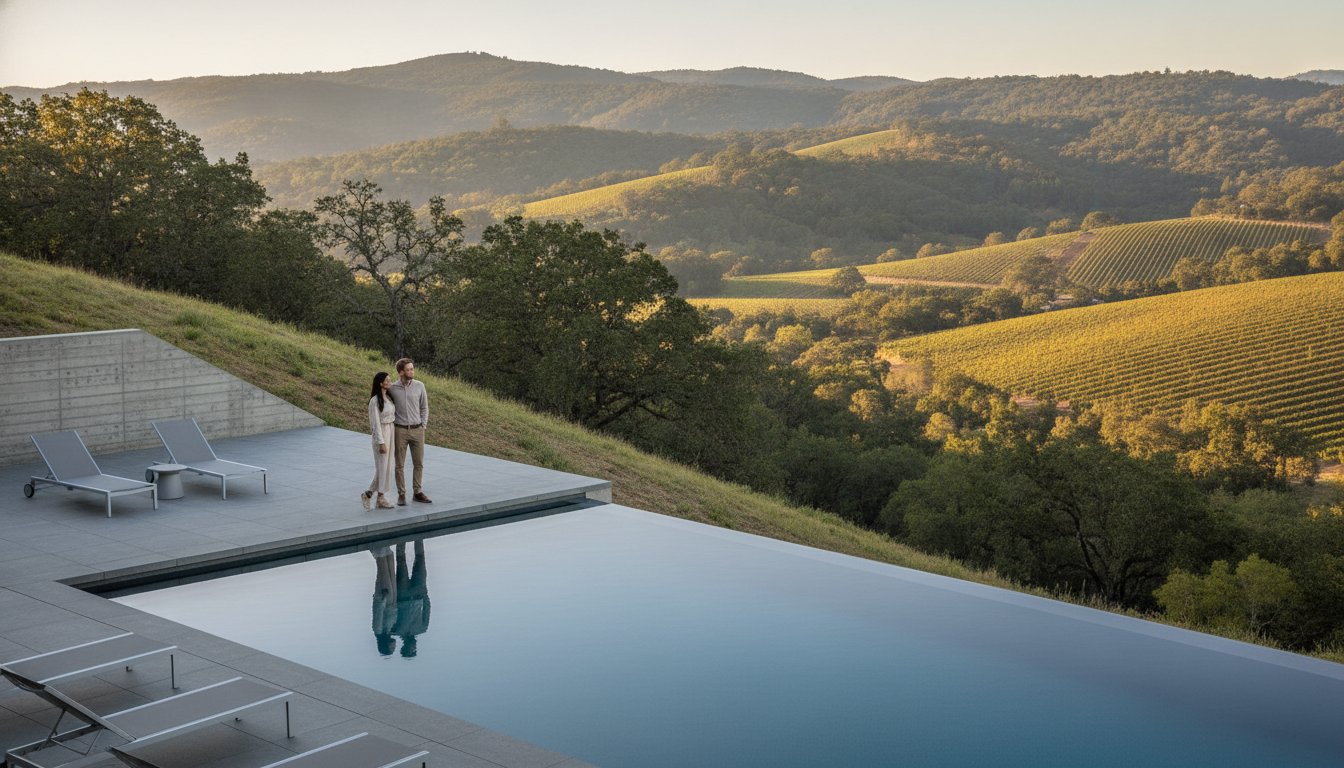
A steep hillside shouldn't be viewed as a barrier to your dream backyard; rather, it is the essential foundation for Sonoma County’s most iconic architectural feature: the vanishing edge pool. While the prospect of building a pool on a slope in Sonoma County often brings up concerns about structural integrity and complex engineering, these elevations offer a unique opportunity to capture the valley’s breathtaking vistas. You might feel a bit overwhelmed by the technical demands of retaining walls or the nuances of the Swimming Pool Safety Act, but these challenges are simply the first steps toward a permanent, high-end outdoor living space.
We understand that you want more than just a place to swim; you want the peace of mind that comes with a stable, meticulously engineered structure. This article provides a clear roadmap for mastering the complexities of hillside construction, from navigating Permit Sonoma’s latest fee schedules for Fiscal Year 2025-2026 to understanding the geotechnical requirements for expansive soils. You'll learn how a methodical approach to design and a deep respect for regional topography can transform a difficult grade into a sophisticated masterpiece that stands the test of time.
Key Takeaways
- Understand how the expansive Adobe clay soils of the Mayacamas and Sonoma Mountain ranges dictate the specific structural requirements of your hillside project.
- Learn about the engineering solutions, such as friction piers and retaining walls, that provide the necessary stability for building a pool on a slope in Sonoma County.
- Discover how infinity edge designs and tiered living spaces can transform a steep grade into a seamless architectural extension of your home and the surrounding valley.
- Gain a clear understanding of the Permit Sonoma submission process for 2026 and the safety regulations required for hillside compliance.
- Identify the essential qualifications to look for when choosing a builder with the specialized expertise needed to handle Sonoma’s unique topography.
Understanding Sonoma County Topography and Soil Challenges
The majestic ridges of the Mayacamas and Sonoma Mountain ranges provide a dramatic backdrop for local estates, yet they present significant technical hurdles for construction. When building a pool on a slope in Sonoma County, the primary adversary isn't just the angle of the land; it's the composition of the earth beneath it. Sonoma is notorious for expansive "Adobe" clay. This soil acts like a sponge, swelling significantly during wet winters and contracting sharply during our dry summers. This constant movement creates intense lateral pressure that can easily buckle a standard pool shell that lacks specialized reinforcement.
A traditional pool is designed to be supported by the earth around it. On a hillside, however, that support is uneven. Without a sophisticated system of retaining walls and structural piers, the weight of the water combined with the soil's natural tendency to move downhill creates a recipe for structural failure. An initial site assessment must look beyond the surface to identify natural drainage patterns and the existing grade before a single shovel touches the ground. If you ignore the natural flow of water or the underlying soil mechanics, you risk more than just a cracked pool; you risk the stability of the entire hillside.
The Critical Geotechnical Report
Every successful hillside project begins with a comprehensive geotechnical survey. A licensed geologist examines the site to identify "slip planes", which are specific layers where soil is likely to slide, and determines the soil's load-bearing capacity. Following the updated 2026 seismic codes, these reports are more rigorous than ever. They ensure the pool is anchored into stable substrate or bedrock, rather than sitting precariously on topsoil that might shift during a seismic event or heavy saturation. It's a meticulous process, but it's the only way to guarantee a permanent, safe outcome.
Drainage and Erosion Control
Water is the most common cause of slope instability. Proper drainage prevents runoff from saturating the hillside, which could lead to soil liquefaction or pool shifting. A well-designed system includes several layers of protection:
- French drains: These redirect subsurface water away from the pool structure.
- Hydro-static relief valves: These balance pressure between the pool shell and the surrounding earth to prevent the pool from "floating."
- Vegetation management: Strategic planting of deep-rooted native species provides natural soil stabilization.
These measures ensure that the integrity of the slope remains intact for decades, protecting your investment from the unpredictable elements of the California landscape.
Engineering Solutions for Hillside Pool Construction
Engineering a hillside pool is a study in precision. It's not enough to simply dig a hole; you have to create a structure that stands independent of the shifting earth. When building a pool on a slope in Sonoma County, the engineering plan serves as the literal foundation for your peace of mind. This involves a combination of robust retaining structures and deep foundation systems that ensure the vessel remains level and secure for decades. These technical choices are what separate a standard installation from a high-end architectural achievement.
Retaining Wall Types for Pool Areas
Retaining walls are the backbone of any hillside project. Segmental gravity walls use their own weight to hold back the soil, while reinforced concrete cantilever walls use a structural "foot" to resist pressure. For a seamless look, we often integrate these walls directly into the pool shell, creating a monolithic structure that is as beautiful as it is strong. Finishing these walls with natural Sonoma stone or modern plaster allows the engineering to blend into the landscape. If you're ready to explore how these technical solutions can bring your vision to life, our team specializes in custom pool design and construction tailored to unique terrains.
Piers, Beams, and Structural Support
In many cases, the engineering requirements for hillside pools necessitate anchoring the structure directly to the bedrock. Caissons or piers are drilled deep into the hillside to bypass unstable topsoil. A friction pier is a deep foundation element that uses the surface area of its shaft to create resistance against the surrounding soil, effectively anchoring the pool in place. We also use grade beams to bridge any pockets of unstable soil, creating a rigid grid that supports the entire pool area. This level of structural redundancy is essential for long-term stability on a grade.
The choice of material is equally critical. Shotcrete is often favored over gunite for hillside applications because its high-velocity application creates a denser, stronger concrete shell with fewer voids. This density is vital when the shell is under constant lateral stress. We also increase the density of the structural steel reinforcement, creating a cage of rebar that is significantly more robust than what you'd find in a flat-lot installation. This level of overbuilding isn't just about safety; it's about ensuring your investment remains a permanent, reliable part of your estate. By prioritizing these invisible details, we ensure that building a pool on a slope in Sonoma County results in a structure that is as stable as the mountains themselves.
Design Opportunities: The Vanishing Edge and Beyond
While the structural engineering discussed previously ensures stability, the design phase is where your vision truly takes shape. A hillside isn't just a technical challenge; it's a canvas for creating a seamless transition between your home and the vineyard-covered valleys below. When building a pool on a slope in Sonoma County, the most sought-after feature is the infinity edge. This design creates a vanishing water line that appears to merge with the horizon, offering an unobstructed view of the landscape. Unlike a traditional pool where the walls contain the water, a vanishing edge allows it to spill over a weir wall into a hidden collection system, creating a stunning visual effect that flat lots simply cannot replicate.
Perimeter overflow systems offer another sophisticated alternative. While a traditional infinity edge spills over a single side, a perimeter overflow allows water to spill into a hidden slot around the entire circumference. This creates a mirror-like surface that stays perfectly still, reflecting the Sonoma sky and surrounding architecture. Regardless of the style you choose, these designs capitalize on the elevation to turn a functional swimming area into a world-class architectural masterpiece.
The Mechanics of an Infinity Edge
The magic of a vanishing edge relies on a sophisticated catch basin and surge tank. On a steep grade, these components are placed below the primary pool level to capture and recirculate overflowing water. This system requires precise hydraulic engineering to maintain a constant, silent flow. Because the water is constantly aerating as it falls, it can shift your water chemistry. This makes a high-quality pool automation system essential for monitoring pH levels and chlorine demand. Achieving perfect visual alignment is a matter of millimeters; the weir wall must be perfectly level to ensure water spills evenly, creating that iconic glass-like surface.
Multi-Level Decking and Hardscape
Tiered outdoor living spaces allow you to connect different elevations of your property, from the main house down to the pool deck and perhaps a lower vineyard-side fire pit. Using cantilevers allows us to extend deck space directly over the slope, maximizing usable square footage without requiring massive footings. For Sonoma’s intense summer sun, we recommend heat-resistant natural stone or premium pavers that remain comfortable underfoot. Integrating glass railings is a popular choice for hillside estates, as they provide essential safety without interrupting the valley views.
Lighting plays a dual role on a hillside. Beyond basic safety for navigating stairs and pathways, strategic pool lighting installation creates a dramatic architectural effect. Uplighting the retaining walls or the catch basin's waterfall feature adds depth and dimension to the property after sunset. By treating the slope as a design opportunity, we transform a complex site into a multi-dimensional retreat that highlights the natural beauty of the region.

Navigating Permits and Regulations in Sonoma County
The administrative side of building a pool on a slope in Sonoma County is often more complex than the engineering itself. Permit Sonoma oversees a rigorous review process that ensures every hillside project respects the county's unique environmental and safety standards. Because these projects involve significant grading and structural work, they trigger oversight from multiple departments. You aren't just getting a building permit; you're coordinating a multi-agency approval that balances structural safety with fire prevention and environmental health.
In rural areas like the Sonoma Valley or the hills above Healdsburg, septic system setbacks are frequently the most critical constraint. A pool must maintain specific distances from leach fields and expansion areas to prevent soil saturation and system failure. Similarly, Sonoma’s heritage oaks are protected by strict preservation ordinances. Building near these trees requires a careful balance to avoid damaging root systems, which often dictates the exact placement of your pool and retaining walls.
The Hillside Permit Roadmap
Navigating this process requires a methodical approach to avoid costly delays. First, you must secure a topographical survey and the geotechnical report discussed in previous sections. These documents provide the baseline data for Step 2: Structural Engineering and Design Review. Here, officials verify that your plans meet the 2026 seismic and grading standards, with permit fees calculated based on the total project valuation. Finally, the project moves to Environmental Health for septic clearance and the Fire Marshall for access and water storage approval. This sequential flow ensures that building a pool on a slope in Sonoma County meets every safety and environmental benchmark.
Safety and Barrier Requirements
The California Swimming Pool Safety Act remains a cornerstone of local regulation, requiring at least two of seven specified safety features for any new installation. On a hillside, the natural slope can sometimes serve as part of the 60-inch minimum enclosure height, provided the vertical drop is steep enough to prevent access. However, this requires specific engineering confirmation to be accepted as a valid barrier by local inspectors.
Meeting these standards involves a combination of technology and physical barriers, such as automatic pool covers and perimeter fencing. For 2026, Sonoma County requires all self-closing and self-latching gates to open outward away from the pool area and be equipped with a release mechanism placed at least 54 inches above the ground. If you're currently evaluating a property for its development potential, we provide professional pool inspections for real estate to help you understand the feasibility and regulatory requirements of your specific site.
Choosing a Specialized Hillside Pool Builder
Choosing a builder for a standard backyard is often a straightforward decision based on aesthetics and price. However, building a pool on a slope in Sonoma County requires a partner who functions more as a structural engineer than a traditional contractor. Many general pool builders struggle with the region’s unique topography because they lack the institutional knowledge required to manage complex soil mechanics and strict local ordinances. When you're dealing with the expansive clay and seismic requirements of the North Bay, "good enough" isn't an option. You need a team that understands how to anchor a luxury vessel into a hillside so it remains a permanent, stable asset to your estate.
When you evaluate a builder’s portfolio, look beyond the shimmering water and the sunset views. Focus on the structural complexity of their previous projects. Do they show pools integrated into steep grades? Do you see robust retaining walls and tiered hardscaping that flows naturally with the land? A builder with 45+ years of experience in Northern California will have a proven track record of managing these invisible but vital elements. This level of longevity is a testament to their ability to navigate the evolving building codes and environmental challenges specific to our region.
Questions to Ask Your Potential Builder
Before committing to a project of this scale, it's essential to vet your builder’s technical expertise. Ask these specific questions to ensure they're prepared for the rigors of hillside construction:
- Do you have specific experience with expansive Adobe clay in Sonoma County? Understanding how local soil behaves during seasonal shifts is non-negotiable for structural integrity.
- Who performs your structural engineering and geotechnical reports? A reputable builder should work with licensed California engineers who specialize in hillside stability and deep foundations.
- Can you manage the entire Permit Sonoma process in-house? As discussed in previous sections, the permit roadmap is intricate. Having a builder who understands the sequence of approvals saves months of potential delays.
The Paradise Pools Difference
At Paradise Pools, we view every hillside as a unique opportunity to blend high-end engineering with the distinct architectural style of the North Bay. Our approach to building a pool on a slope in Sonoma County is rooted in a commitment to longevity and meticulous craftsmanship. We don't just build pools; we create stable, long-lasting outdoor environments that respect the natural beauty of your property. By managing every detail from the initial site survey to the final lighting installation, we provide a seamless, guided experience that turns a complex engineering task into a tangible reality. Ready to transform your hillside? Schedule a design consultation with Paradise Pools.
Realizing Your Hillside Vision
Transforming a steep grade into a luxury retreat is a journey that requires equal parts vision and technical precision. We've examined how building a pool on a slope in Sonoma County demands a rigorous approach to geotechnical challenges and a thorough understanding of Permit Sonoma’s evolving requirements. When you prioritize structural integrity through specialized engineering and thoughtful design, you create more than just a place to swim; you establish a permanent landmark that celebrates the natural beauty of the North Bay.
Navigating these complexities is seamless when you have a partner with 45+ years of Northern California expertise. As a family-owned and operated firm since 1978, we specialize in the advanced engineering required for expansive soils and the meticulous craftsmanship your estate deserves. We take pride in acting as a stabilizing force throughout the construction process, ensuring every detail is handled with quiet confidence and professional oversight.
Start Your Custom Hillside Pool Project with Paradise Pools and take the first step toward a lasting, sophisticated outdoor living space. Your hillside isn't a constraint; it's the foundation for something extraordinary.
Frequently Asked Questions
Is it significantly more expensive to build a pool on a slope in Sonoma County?
Yes, hillside construction typically requires a higher investment than flat-lot projects due to the specialized engineering and structural components involved. These costs stem from the need for robust retaining walls, deep-foundation piers, and extensive grading to manage the region’s expansive Adobe clay. While the initial outlay is higher, the result is a structurally superior vessel that captures premium views and maximizes the utility of your property.
How long does the permit process take for a hillside pool in 2026?
The permit process for a hillside pool in 2026 generally takes approximately six months from the initial application to approval. This timeline includes a six-week period for site consultations, soil testing, and drafting the necessary engineering plans. Because building a pool on a slope in Sonoma County requires multi-departmental reviews, including Environmental Health and the Fire Marshall, a methodical approach to the submission is essential to avoid administrative delays.
Can I build a pool near my septic system on a hillside?
You can build a pool near a septic system, provided you strictly adhere to the specific setback requirements mandated by Sonoma County Environmental Health. These regulations ensure that the pool structure doesn't interfere with leach fields or reserve expansion areas. On a slope, these setbacks are even more critical to prevent subsurface water from destabilizing the hillside or compromising the septic system’s long-term drainage capacity.
Will a hillside pool increase my property value in Napa or Sonoma?
A professionally engineered hillside pool often provides a significant return on investment by transforming unusable land into a high-end architectural feature. In luxury markets like Napa and Sonoma, vanishing edge pools that capture vineyard views are highly coveted by prospective buyers. These structures enhance the estate's aesthetic appeal while providing the structural security and permanence that discerning buyers look for in a hillside property.
What is the steepest slope you can build a pool on?
While modern engineering allows for construction on various grades, Sonoma County generally discourages development on hillsides with a slope of more than 30 percent. Projects on steep inclines require extensive geotechnical justification and specialized structural designs to ensure long-term stability. If your property exceeds this threshold, a custom engineering plan featuring caissons and reinforced retaining walls is necessary to meet safety standards and obtain approval.
Do I need a retaining wall for a pool on a gentle slope?
A retaining wall is almost always required even on gentle slopes to manage lateral soil pressure and ensure the pool remains level. Even a slight grade can cause uneven weight distribution and drainage issues if the pool shell isn't properly supported. When building a pool on a slope in Sonoma County, these walls act as a vital safeguard against the natural movement of expansive clay soils during seasonal weather shifts.
How do you prevent a hillside pool from leaking or shifting?
Prevention starts with anchoring the pool shell into stable substrate or bedrock using friction piers and caissons. We also utilize high-density shotcrete and reinforced steel cages to create a rigid, monolithic structure that resists lateral pressure. Implementing advanced drainage systems, such as French drains and hydrostatic relief valves, further protects the pool by preventing water from building up behind the shell or underneath the slope.
What maintenance is unique to infinity edge pools on a slope?
Infinity edge pools require specialized care for the catch basin and surge tank to ensure the recirculating system remains debris-free and efficient. Because the water is constantly aerating as it spills over the weir wall, you'll need to monitor pH levels and calcium hardness more frequently to prevent scaling on the tile. Regular weekly pool maintenance ensures that the auto-leveling sensors and high-flow pumps continue to function perfectly year-round.


